

Historic Staircases and NYC Building Code: Balancing Safety, Landmarks Rules, and Character
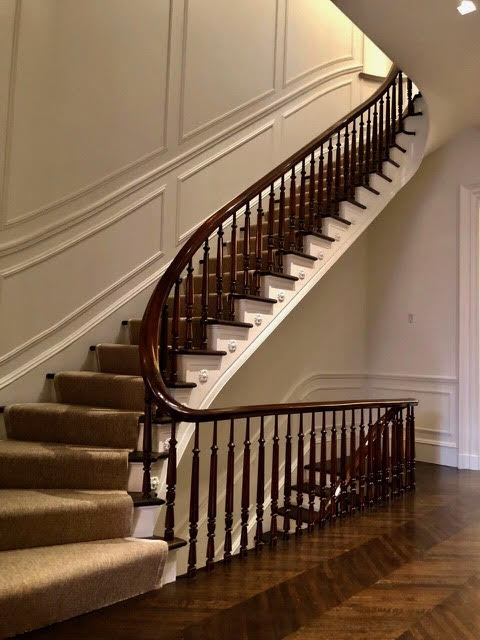
Own a pre-war apartment or a brownstone in New York and you own a small legal puzzle: a staircase built to the standards of 1905, governed by the codes of 2026, and in some cases protected by landmark law on top of both. Owners usually meet this puzzle at the worst moment, mid-renovation, when a contractor or a co-op board asks whether the stair is "to code."
The good news is that code compliance, landmark review, and historic character are not enemies. They pull in different directions, but they can be reconciled, and in New York they are reconciled every day. At Fifty Three Restorations in Long Island City, stair work in older and landmarked buildings is routine, and the same questions come up on nearly every project.
Planning stair work in an older or landmarked NYC building? Talk to us first.
The Three Rulebooks That Can Apply to Your Staircase
- The NYC Building Code. This governs safety: handrail graspability and height, guard height and baluster spacing, tread and riser dimensions, and structural capacity. Modern code generally calls for handrails roughly 34 to 38 inches above the tread nosing, guards that resist a 4-inch sphere passing through, and consistent tread and riser geometry. Exact requirements depend on occupancy type, and your architect or contractor should confirm the current figures for your building.
- Landmarks rules. If your building sits in a historic district or is an individual landmark, exterior work is reviewed by the Landmarks Preservation Commission, and interior work is reviewed when the interior itself is a designated interior landmark or the space is affected by a larger filing. Routine in-kind repair of a private interior stair often proceeds without LPC review, but confirm before assuming.
- Your building's own rules. Co-op and condo alteration agreements frequently add their own layer: licensed and insured contractors, work-hour limits, engineering sign-offs, and board pre-approval. In practice, the alteration agreement shapes the project timeline as much as the city does.
Grandfathered Does Not Mean Untouchable
Here is the concept that surprises most owners: existing conditions are generally allowed to remain. A staircase built legally in 1905 does not have to be rebuilt to 2026 dimensions just because time has passed. Codes apply their full force to new construction and to work you choose to do now.
The trigger is the work itself. Refinishing and in-kind repair, meaning you restore what exists without changing it, rarely forces upgrades. But once a project crosses into alteration territory, replacing the stair, changing its geometry, or touching means of egress, current code enters the conversation, and the portion you alter may need to meet modern standards. This is why "restore, don't gut" is not just a preservation slogan in New York. It is often the simplest regulatory path, and it keeps the original fabric that gives these homes their value.
The Safety Upgrades That Matter Most
Character and safety meet at a handful of details, and most can be improved invisibly.
- Handrail stability. A rail that moves under load fails its one job. Re-anchoring newels and tightening rail joints brings a historic rail back to full function without changing its look. This is core Wood Staircases and Handrails work.
- Baluster spacing. Many historic balustrades have gaps a small child could pass through. Where a household needs it, discreet solutions exist: adding balusters in the original rhythm, or nearly invisible interior rods, rather than ripping out the balustrade.
- Tread traction. Worn, polished nosings are a slip risk. Modern clear finishes with proper sheen and anti-slip additives restore grip without changing appearance, something our finish guide for high-traffic New York staircases covers in detail.
- Loose treads and risers. A tread that flexes is a fall hazard and a structural symptom. Tightening from below usually solves it without touching the visible surface.
- Lighting. Often the cheapest safety upgrade on a dark stair hall, and completely outside the historic fabric.
Working With the LPC and Your Board Without Losing Months
Approvals go fastest when they are planned, not discovered.
- Determine landmark status early. A quick check of the LPC's maps tells you whether the building is designated and whether any interior designation applies.
- Frame the work as in-kind repair where it honestly is. Restoration to the existing condition is the lightest-touch category of work, and honest scoping keeps it there.
- Bring the board a real scope. Co-op boards approve faster when the submission includes a written scope, insurance certificates, and a schedule. A vague "stair work" request invites weeks of questions.
- Sequence filings before fabrication. Shop-made components like matched treads or turned balusters should not be cut until approvals are in hand. A disciplined preservation and maintenance plan builds the approval window into the schedule.
Our NYC Landmarks Preservation building owner guide goes deeper on the LPC side, and our post on common stair restoration mistakes covers the DIY errors that turn small jobs into board-level problems.
When to Bring in Professionals
Three situations call for more than a handy contractor. First, any structural symptom: sagging, cracked stringers, or treads that flex, because that is engineering territory. Second, any designated building: the approval path and the in-kind craftsmanship both need a shop that has done landmark work before. Third, any alteration: changing the stair's geometry puts you fully inside current code, and the design needs to satisfy both the code official and the character of the house.
Since 1990, Fifty Three Restorations has worked inside New York's older and landmarked buildings, with partners like the Central Park Conservancy and the New York Landmarks Conservancy trusting our hands on landmark structures. That experience is what keeps a staircase project from becoming a regulatory saga.
Frequently Asked Questions
Does my old staircase have to meet current NYC building code?
Generally no, not as an existing condition. Code applies in full when you build new or alter what exists. In-kind repair and refinishing of the existing stair is usually the lightest-touch path, but confirm the specifics of your project with your contractor or architect.
Do I need Landmarks Preservation Commission approval for interior stair work?
Often no for ordinary in-kind repair inside a private residence, even in a historic district. Interior landmark designations and work tied to larger filings are different. Check designation status with the LPC before assuming either way.
My balusters are spaced wider than modern code allows. Do I have to replace the balustrade?
Usually not. Existing conditions can remain, and where a household wants tighter spacing, balusters can be added in the original rhythm or discreet barriers fitted without sacrificing the historic balustrade.
Will my co-op board approve staircase restoration?
Boards routinely approve stair work when the submission is complete: licensed and insured contractor, written scope, schedule, and protection plan for common areas. Most delays come from incomplete applications, not from the work itself.
What handrail height does NYC code require?
Modern codes generally call for handrails around 34 to 38 inches above the tread nosing, with graspable profiles, though the exact requirement depends on your building's occupancy and which code edition applies. Verify the current figures for your specific project with your design professional.
Project Spotlight: Landmark Standards, Applied
Our restoration of Belvedere Castle in Central Park shows what preservation-grade work looks like when the oversight is real: documented methods, in-kind repair, and craftsmanship reviewed by people whose job is protecting New York's historic fabric. The same discipline comes to your staircase, whatever its address.
Fifty Three Restorations Serving the Forest Hills Community and Beyond in Long Island City
Fifty Three Restorations works to meet the woodworking needs of the local community across Long Island City. From our shop near Queens, we proudly handle staircase restoration in older and landmarked buildings for homeowners and property owners throughout New York City.
Our shop sits at 38-16 Skillman Ave # B, Long Island City, NY 11101. From there our team reaches clients in Forest Hills, Kew Gardens, Jackson Heights, Astoria, and Sunnyside, and we serve customers across Queens, Brooklyn, Manhattan, and the surrounding communities.
Quick Access Information
- 📍 Minutes from the Long Island Expressway (I-495) and Queens Boulevard
- 🚗 Easy access via the Brooklyn-Queens Expressway (I-278) and the Grand Central Parkway
- 🌆 Serving residents across Forest Hills, Kew Gardens, and Jackson Heights
Driving Directions from Forest Hills to Fifty Three Restorations
<iframe src="https://www.google.com/maps/embed?pb=!1m18!1m12!1m3!1d3022.670979246106!2d-73.9260912!3d40.747264799999996!2m3!1f0!2f0!3f0!3m2!1i1024!2i768!4f13.1!3m3!1m2!1s0x89c25f2822fcc717%3A0xb0f6d7a4c4f548ac!2sFifty%20Three%20Restorations%20Inc!5e0!3m2!1sen!2sph!4v1776106836033!5m2!1sen!2sph" width="600" height="450" style="border:0;" allowfullscreen="" loading="lazy" referrerpolicy="no-referrer-when-downgrade"></iframe>
From Forest Hills, take Queens Boulevard west toward Long Island City, then turn toward Skillman Avenue and follow it to 38-16 Skillman Ave # B. Most drivers reach our shop in about 20 minutes.
Business Hours and Contact
- Business name: Fifty Three Restorations
- Address: 38-16 Skillman Ave # B, Long Island City, NY 11101
- Phone: (212) 566-1053
- Email: info@fiftythreerestorations.com
- Website: https://fiftythreerestorations.com
Hours
Monday to Friday: 8:00 AM to 4:30 PM
Saturday: By appointment
Sunday: Closed
Call during business hours and a member of our team will talk through your project, answer questions, and set up a site visit. Prefer to write first? Send a note through our Contact Us page and we will reply quickly. (Please confirm current hours by phone before visiting.)
Ready to Do It Right
The safest staircase is a sound one, and the most beautiful one is usually the original, restored well. If code questions, board approvals, or landmark rules stand between you and a better stair, we can help you through them.
Fifty Three Restorations has served New York since 1990, and our Long Island City team is ready to help. Call (212) 566-1053 or visit https://fiftythreerestorations.com/contact-us to request a proposal. Your staircase has survived a century of New York. Let us help it handle the next one.
Follow Fifty Three Restorations
- Facebook: https://www.facebook.com/iconicnewyorkbuildings
- Instagram: https://www.instagram.com/53restorations/
- LinkedIn: https://www.linkedin.com/company/fifty-three-restorations-inc/
Sources
- NYC Department of Buildings, NYC Construction Codes | https://www.nyc.gov/site/buildings/index.page
- NYC Landmarks Preservation Commission | https://www.nyc.gov/site/lpc/index.page
- USDA Forest Products Laboratory, Wood Handbook | U.S. Department of Agriculture, Forest Service | 2021 | https://research.fs.usda.gov/treesearch/62261
We navigate these code and landmark requirements on every Brooklyn wood stair restoration project.
Related Resources

Get Started with Your Project
Contact us today to schedule a consultation.
