

Common Mistakes New York Homeowners Make When Restoring Stairs Themselves

The weekend starts with confidence and a rented sander. By Sunday night, the staircase looks worse than before, the new finish is already peeling on the third tread, and the loose baluster you tried to tighten has a fresh crack running through it. Sound familiar? Almost every DIY stair restoration that goes sideways follows a script, and you can probably already recognize yourself in a few scenes.
There is nothing wrong with being hands-on. Many New York homeowners do excellent work on their houses. Stairs, though, punish small errors in ways other projects do not, because a staircase is structural, it is used every day, and a mistake can become a safety problem. At Fifty Three Restorations in Long Island City, we are often called in to undo a DIY stair restoration that cost more to fix than the original project would have. Let's break it down, so you can sidestep the most common traps.
Understanding the Problem: Why Stairs Punish DIY Errors
A staircase is not a piece of furniture you can carry to the garage and experiment on. It is fixed in place, built from many interlocking parts, and walked on by everyone in the home. That combination raises the stakes on every step of the work.
Two facts make the point. First, stairs are a leading site of home injury. A study in the American Journal of Emergency Medicine estimated more than a million stair-related injuries treated in United States emergency departments each year, with young children and older adults most at risk. A wobbly DIY repair raises that risk under your own roof. Second, wood is unforgiving of bad timing. The USDA Forest Products Laboratory explains that wood swells and shrinks with humidity, so refinishing at the wrong moisture state, or installing a new part before it acclimates, locks in problems that surface a season later.
The traps that catch DIY restorers most often:
- Sanding through veneer or removing more wood than intended
- Refinishing when the wood is at the wrong moisture state for the season
- Forcing screws into moving wood and cracking parts
- Skipping the structural check and finishing over a real problem
- Choosing a finish that cannot handle daily stair traffic
Common Mistakes, as Cautionary Stories
Here are the missteps we are called to repair, told the way they actually happen.
- The over-sander. A homeowner rents an aggressive sander, leans in to erase every mark, and burns through the surface, flattening the worn character or cutting into a thin veneer. Now the wood needs more repair than the original wear ever did.
- The caulk-everything fix. Winter gaps appear, so every joint gets sealed with hard caulk. Come summer, the wood swells, has nowhere to go, and buckles or splits. The seal that was meant to help traps the movement.
- The screw-it-down rescue. A loose baluster gets a long screw driven in hard. The dry old wood splits along the grain. One loose part becomes one broken part.
- The skip-the-check refinisher. A staircase gets a gorgeous new finish, applied right over a soft, rotted bottom tread hidden under old paint. The finish looks great for a month, then the tread gives way.
- The wrong-finish shopper. A finish meant for furniture goes onto a busy New York staircase. Within a year the walking path has worn through and turned slick, and the whole job needs redoing.
Each story starts with a reasonable plan and ends with a bigger bill, because stairs do not forgive these errors quietly.
The Professional Solution: How We Restore Stairs the Right Way
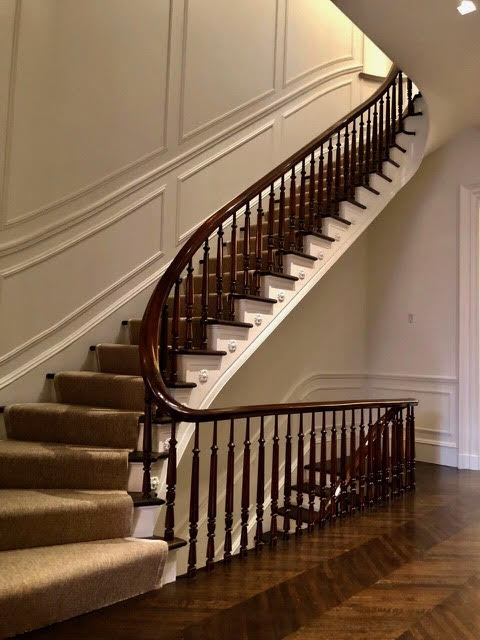
When we restore a staircase, the same discipline prevents every one of those failures. Through our Wood Staircases and Handrails and Architectural Woodwork Finishes services, the order is deliberate.
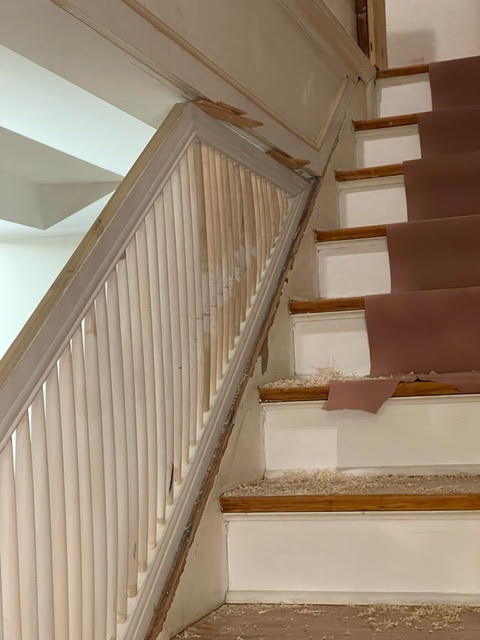
We assess for structure first. Before any finish work, we test treads, check stringers, and find hidden rot or insect damage. This single step prevents the skip-the-check disaster.
We respect wood movement. We re-seat and re-glue loose parts with the right joints, never brute force, so balusters and treads do not crack. We leave room for the wood to move with New York seasons.
We sand correctly. We remove the failed finish without burning through the wood, and on older stairs we sand gently to keep the character intact.
We time the finishing. We work the wood at a stable moisture state and let each coat cure, so the finish holds through humid summers and dry winters.
We choose finishes built for stairs. We select finishes suited to heavy daily traffic, not furniture coatings, so the walking path lasts.
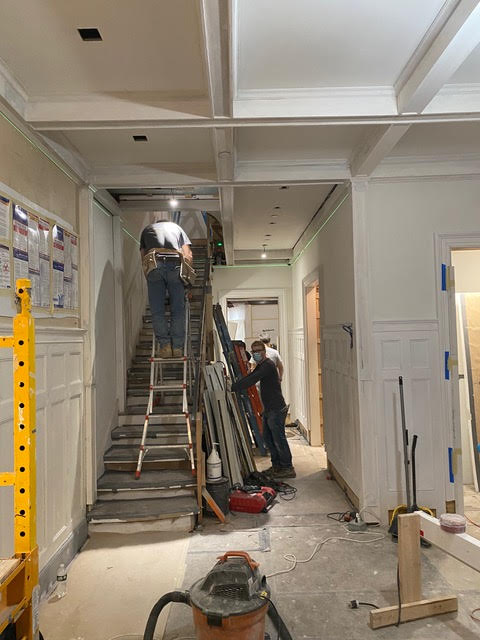
Where a DIY project has already caused damage, our Period Reconstructions service rebuilds parts that were cracked or sanded too far. You can see our careful approach to demanding woodwork in the Belvedere Castle project.
Why Local New York Experience Matters
Timing and reading the wood are exactly where DIY restorers stumble and where local experience pays. New York's strong seasonal humidity swings mean the right time and method for sanding and finishing change with the calendar. We know how the wood behaves here, how older New York homes hide damage under carpet and paint, and how to spot the structural issues a homeowner might finish right over. Since 1990 we have restored and, often, rescued New York staircases, from Long Island City to upstate, which is why our work holds where weekend projects fail.
Cost and Value: What a DIY Mistake Really Costs
It helps to compare the true costs. A DIY project that goes wrong usually carries:
- The original materials and tools, already spent
- The repair of new damage, cracked parts, burned-through wood, or a rotted tread finished over
- A second finishing job, because the first one failed
- Lost time, often more than the professional job would have taken
The value of doing it right the first time is plain. Professional restoration keeps your original wood sound, your staircase safe, and your finish lasting, with no second bill to undo a first attempt. For a structure your family uses every day, that reliability is the real return. The cheapest path is the one you only pay for once.
5 Practical Tips You Can Use Today
If you are still tempted to tackle the stairs yourself, at least do this.
- Check structure before anything. Test for soft treads, cracked stringers, and sway. Never finish over a structural problem.
- Mind the season. Wood moves with humidity. The wrong time of year can lock in gaps and finish failures.
- Never force a fastener. Old, dry wood splits easily. If a part is loose, it needs the right joint, not a long screw.
- Use a stair-rated finish. Furniture finishes wear through on stairs fast. Match the finish to daily traffic.
- Know when to stop. If you uncover rot, cracks, or anything structural, call a pro before it becomes a safety issue.
Frequently Asked Questions
Is restoring my own stairs really that risky? Stairs are structural and used daily, so errors can become safety problems. Many DIY projects also cost more to fix than the original would have professionally.
What is the most common DIY stair mistake? Finishing over a hidden structural problem and forcing fasteners into old wood are two of the most frequent and most costly.
Can I at least refinish the surface myself? You can attempt light work, but timing the finish to the wood's moisture state and choosing a stair-rated finish are where DIY jobs often fail.
I already damaged my staircase. Can it be fixed? Usually, yes. We repair burned-through wood, cracked parts, and finish failures, and rebuild anything beyond saving to match the original.
Why does my DIY finish keep peeling? Common causes are finishing at the wrong moisture state, skipping proper prep, or using a finish not meant for stair traffic. Each is avoidable.
Customer Success Story
James C handed us original double-hung windows from around 1790 and a Dutch door of the same era, the kind of fragile old work that punishes a wrong move. Our team removed, restored, and reinstalled the windows with new weatherstripping, then rebuilt the door to operate like new. "They are expert craftspeople," he said. The point for any DIY-minded homeowner is this: old wood rewards the right method and punishes the wrong one. A staircase is no place to learn that the hard way. The right hands, working in the right order, get it done once and get it done right.
Fifty Three Restorations Serving the Astoria Community and Beyond in Long Island City
Fifty Three Restorations works to meet the woodworking needs of the local community across Long Island City. With our location near Queens, we proudly handle stair restoration and repair for homeowners and property owners throughout New York City.
Our shop sits at 38-16 Skillman Ave # B, Long Island City, NY 11101. From there our team reaches clients in Astoria, Sunnyside, Woodside, Greenpoint, and Williamsburg, and we serve customers across Queens, Brooklyn, Manhattan, and the surrounding communities. New York homes deserve woodwork that lasts, and our New York roots run deep.
Quick Access Information
- 📍 About 10 minutes from the Ed Koch Queensboro Bridge and Gantry Plaza State Park
- 🚗 Easy access via the Brooklyn-Queens Expressway (I-278) and Queens Boulevard
- 🌆 Serving residents across Astoria, Sunnyside, and Woodside
We know that finding skilled stair restoration and repair close to home matters. That is why property owners across New York trust Fifty Three Restorations for reliable, careful work. From Long Island City brownstones to upstate farmhouses, our crews bring the same standards to every project. We have served the New York preservation community since 1990, and partners like the Central Park Conservancy and the New York Landmarks Conservancy have trusted our hands on landmark buildings.
Get DIY Stair Restoration Services in Queens Now
Call us today at (212) 566-1053 or contact us online to request a proposal for your project.
Driving Directions from Astoria to Fifty Three Restorations
From Astoria, head south on 31st Street, then connect to Northern Boulevard heading west. Turn onto Skillman Avenue and follow it to 38-16 Skillman Ave # B in Long Island City. Most drivers reach our shop in under 15 minutes. The map below shows the route into our Long Island City location.
<iframe src="https://www.google.com/maps/embed?pb=!1m18!1m12!1m3!1d3022.670979246106!2d-73.9260912!3d40.747264799999996!2m3!1f0!2f0!3f0!3m2!1i1024!2i768!4f13.1!3m3!1m2!1s0x89c25f2822fcc717%3A0xb0f6d7a4c4f548ac!2sFifty%20Three%20Restorations%20Inc!5e0!3m2!1sen!2sph!4v1776106836033!5m2!1sen!2sph" width="600" height="450" style="border:0;" allowfullscreen="" loading="lazy" referrerpolicy="no-referrer-when-downgrade"></iframe>
Business Hours and Contact
Reaching Fifty Three Restorations in Long Island City is simple. Here are the details you need.
- Business name: Fifty Three Restorations
- Address: 38-16 Skillman Ave # B, Long Island City, NY 11101
- Phone: (212) 566-1053
- Email: info@fiftythreerestorations.com
- Website: https://fiftythreerestorations.com
Hours
- Monday to Friday: 8:00 AM to 4:30 PM
- Saturday: By appointment
- Sunday: Closed
Our Long Island City shop serves clients across New York. Call during business hours and a member of our team will talk through your project, answer questions, and set up a site visit. Prefer to write first? Send a note through our contact us online page and we will reply quickly. (Please confirm current hours by phone before visiting.)
Ready to Start Your Project
Started a stair project that went sideways, or want to avoid one? We restore New York staircases the right way, and we fix the ones that did not go to plan.
Fifty Three Restorations has served New York since 1990, and our Long Island City team is ready to help. Get a proposal today, and let us show you what careful DIY stair restoration can do for your home. Spots on our project calendar fill up through the busy New York seasons, so reaching out early gives you the best schedule.
Call (212) 566-1053 or contact us online to get a proposal. You can also visit our shop at 38-16 Skillman Ave # B, Long Island City, NY 11101. Your staircase has a story worth keeping, and we would be glad to help you protect it.
Follow Fifty Three Restorations
See more of our New York restoration work and connect with our Long Island City team online.
- Facebook: https://www.facebook.com/iconicnewyorkbuildings
- Instagram: https://www.instagram.com/53restorations/
- LinkedIn: https://www.linkedin.com/company/fifty-three-restorations-inc/
Sources
- Stair-related injuries treated in United States emergency departments | American Journal of Emergency Medicine (Blazewick et al.) | 2018 | https://pubmed.ncbi.nlm.nih.gov/28947224/
- USDA Forest Products Laboratory, Wood Handbook (Chapter 13: Drying and Control of Moisture Content and Dimensional Changes) | U.S. Department of Agriculture, Forest Service | 2021 | https://research.fs.usda.gov/treesearch/62261
- A Brief Guide to Mold, Moisture and Your Home | U.S. Environmental Protection Agency | Updated 2024 | https://www.epa.gov/mold/brief-guide-mold-moisture-and-your-home
Avoiding these mistakes is exactly where an experienced stair restoration in Brooklyn contractor earns their fee.
Related Resources
Explore More Insights

Get Started with Your Project
Contact us today to schedule a consultation.
