

Preserving Historic Staircases in Upstate New York Farmhouses and Colonials
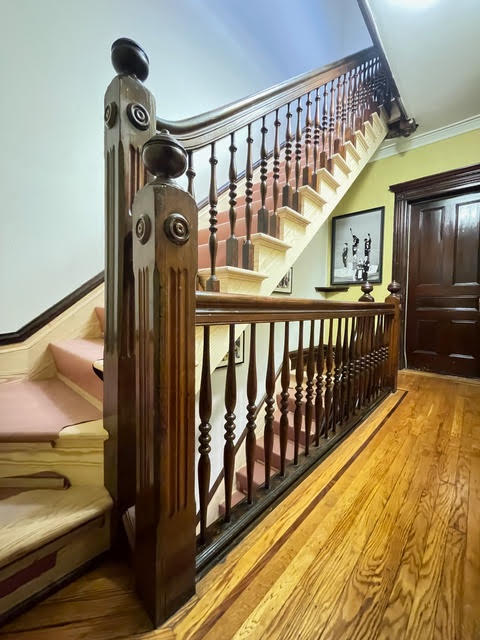
A few years back, a staircase in a Hudson Valley colonial looked like a lost cause. The treads were worn into soft hollows, the finish had gone nearly black, and a previous owner had screwed a modern rail over the original. The new owners braced themselves to tear it out. Then someone looked closer. Under the grime sat hand-cut treads and a newel post turned more than two centuries ago. The staircase did not need replacing. It needed careful hands and patience. Months later it stood restored, sound underfoot, with its old patina still telling the house's story.
That is the heart of historic staircase preservation. The goal is never to make an old staircase look brand new. The goal is to keep it standing, safe, and honest to its age. Owners of upstate New York farmhouses and colonials buy these homes for exactly that character, and the staircase is often its centerpiece. At Fifty Three Restorations, we have served New York's preservation community since 1990, and saving original staircases is what we do. Let's break it down.
Understanding the Problem: Age, Patina, and the Fear of Losing Both
A historic staircase carries two kinds of value at once. There is the structure, the treads and stringers that hold weight. And there is the patina, the soft color, the worn edges, the marks of generations that no new staircase can fake. Upstate owners worry, with good reason, that restoration will scrub away the second while fixing the first.
That fear comes from watching the wrong kind of work. Aggressive sanding and a heavy modern finish can erase a century of character in an afternoon. Real preservation moves the other way. The National Park Service Standards for the Treatment of Historic Properties set the guiding rule: retain and repair historic material wherever possible, and replace only what is beyond saving, matching the original in design, color, and texture.
The wood itself usually cooperates. The USDA Forest Products Laboratory notes that old-growth lumber, common in early New York homes, is dense and stable, and that surface wear and seasonal movement are normal across its life. So the dark, worn staircase that looks finished is frequently sound underneath, patina and all.
Signs that a historic staircase needs attention, but not replacement:
- A finish that has darkened, crazed, or worn through
- Treads hollowed along the walking line but still firm
- Loosened joints and seasonal squeaks from years of wood movement
- Earlier non-historic repairs added over the original work
- A loose or modified handrail that no longer matches
Common Mistakes Owners of Historic Homes Make
Love for an old house can still lead to choices that cost its character.
- Sanding away the patina. Heavy sanding strips the soft, aged surface that makes the staircase special. Gentle methods preserve it.
- Replacing original parts with stock. A modern baluster among hand-turned originals announces itself forever.
- Coating with a glossy modern finish. A thick, plastic-looking finish fights the historic look. Period-appropriate finishes belong here.
- Hiring a general remodeler. Preservation is a distinct trade. Standard remodeling methods can quietly destroy what makes the staircase historic.
- Removing original material to save time. Tearing out instead of repairing trades irreplaceable history for a faster schedule.
The Professional Solution: How Historic Staircase Preservation Works
Our approach treats the original staircase as something to protect, not overwrite. Through our Wood Staircases and Handrails and Period Reconstructions services, the work unfolds with care.
We document before we touch. We record the staircase's profiles, joinery, and finish so every decision respects what is there.
We retain the original. Worn treads, aged handrails, hand-turned balusters, these stay. We re-glue and re-seat loosened joints and stabilize the structure without stripping character.
We repair before we replace. A cracked stringer or a single failed tread gets repaired where possible. Where a part is truly gone, we recreate it by hand to match the original profile, exactly as preservation standards call for.
We preserve patina. Our Architectural Woodwork Finishes service uses gentle cleaning and period-appropriate finishes, so the staircase keeps its age while gaining protection. We do not erase two centuries to chase a showroom shine.
We honor the rules. New York's historic homes sometimes carry preservation requirements, and we work within them. Our partnerships with the New York Landmarks Conservancy and the Central Park Conservancy reflect this respect for original fabric.
You can see this philosophy in projects like our greenhouse restoration project and the Asbury United Methodist Church project, where keeping the original guided the whole job.
Why Local New York Experience Matters
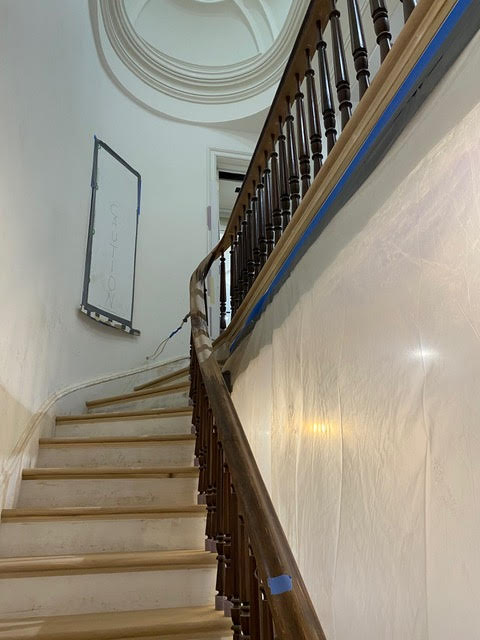
Upstate farmhouses and Hudson Valley colonials were built by hand, era by era, each with its own methods and wood species. Reading those differences takes experience with New York's historic building stock. We know the construction of early colonial stairs, the species favored in different periods, and how decades of seasonal humidity have moved the wood. We also know how to preserve patina rather than sand it away, a skill that separates preservation from ordinary refinishing. Since 1990 we have worked across New York, from Long Island City to upstate homes, on exactly this kind of staircase.
Cost and Value: What Goes Into Historic Staircase Preservation
A fair figure follows a real look at the staircase. These factors shape it:
- How much can be retained. The more original material we keep and repair, the more efficient the work.
- Custom matching. Recreating a hand-turned baluster or a carved newel takes skilled time.
- Gentle methods. Careful cleaning and finishing to preserve patina take patience, which is part of the craft.
- Structural repairs. Cracked stringers or rotted treads add scope where present.
The value is hard to overstate for a historic home. Preservation keeps the very feature that gives the house its soul and its market appeal to buyers who seek original detail. It protects old-growth wood that cannot be replaced. And it usually costs less than a full reproduction staircase while giving a truer result. Money spent preserving a historic staircase protects the reason you bought the house.
5 Practical Tips You Can Use Today
Caring for a historic staircase between projects is simple.
- Clean gently. Skip harsh chemicals and rough scrubbing. A soft, mild clean protects the patina.
- Steady the indoor humidity. Holding humidity in a stable range slows the wood movement that loosens old joints.
- Resist the urge to sand. If the finish looks tired, get advice before sanding. You may lose more than you fix.
- Document the details. Photograph balusters, the newel, and joinery. These records help any future restorer match the original.
- Keep original parts. If a baluster ever comes loose, save it. An original is worth far more than a replacement.
Frequently Asked Questions
Will restoring my historic staircase make it look brand new? No, and that is the point. Good preservation keeps the patina and character while making the staircase sound and safe.
Can you save a staircase that looks almost black with age? Usually, yes. A darkened finish often hides sound, attractive wood. We clean and restore gently rather than stripping away history.
How do you match a baluster from a colonial-era staircase? We recreate missing parts by hand to match the original profile, following the same standard preservationists use across New York.
Is preservation more expensive than replacement? Often it costs less than a full reproduction staircase, and it keeps irreplaceable original wood. The value strongly favors preservation.
Do upstate homes have preservation rules like NYC? Some do, depending on local designations. We work within whatever requirements apply and help owners understand them.
Customer Success Story
Asbury United Methodist Church entrusted Fifty Three Restorations with a 100-year-old Rose Window, a historic focal point of the building. Anne Leclercq recalled how our team, led by Vince, coordinated with the glass contractor, kept the parish informed, and delivered on time. "It was reassuring to work with experienced professionals who care about their work and the parish that they work with," she said. That same care guides a historic staircase. Whether the feature is a century-old window or a colonial stair, preservation means protecting the original, working patiently, and leaving the history intact for the next generation.
Fifty Three Restorations Serving the Astoria Community and Beyond in Long Island City
Fifty Three Restorations works to meet the woodworking needs of the local community across Long Island City. With our location near Queens, we proudly handle historic staircase preservation for homeowners and property owners throughout New York City.
Our shop sits at 38-16 Skillman Ave # B, Long Island City, NY 11101. From there our team reaches clients in Astoria, Sunnyside, Woodside, Greenpoint, and Williamsburg, and we serve customers across Queens, Brooklyn, Manhattan, and the surrounding communities. New York homes deserve woodwork that lasts, and our New York roots run deep.
Quick Access Information
- 📍 About 10 minutes from the Ed Koch Queensboro Bridge and Gantry Plaza State Park
- 🚗 Easy access via the Brooklyn-Queens Expressway (I-278) and Queens Boulevard
- 🌆 Serving residents across Astoria, Sunnyside, and Woodside
We know that finding skilled historic staircase preservation close to home matters. That is why property owners across New York trust Fifty Three Restorations for reliable, careful work. From Long Island City brownstones to upstate farmhouses, our crews bring the same standards to every project. We have served the New York preservation community since 1990, and partners like the Central Park Conservancy and the New York Landmarks Conservancy have trusted our hands on landmark buildings.
Get Historic Staircase Preservation Services in Queens Now
Call us today at (212) 566-1053 or contact us online to request a proposal for your project.
Driving Directions from Astoria to Fifty Three Restorations
From Astoria, head south on 31st Street, then connect to Northern Boulevard heading west. Turn onto Skillman Avenue and follow it to 38-16 Skillman Ave # B in Long Island City. Most drivers reach our shop in under 15 minutes. The map below shows the route into our Long Island City location.
<iframe src="https://www.google.com/maps/embed?pb=!1m18!1m12!1m3!1d3022.670979246106!2d-73.9260912!3d40.747264799999996!2m3!1f0!2f0!3f0!3m2!1i1024!2i768!4f13.1!3m3!1m2!1s0x89c25f2822fcc717%3A0xb0f6d7a4c4f548ac!2sFifty%20Three%20Restorations%20Inc!5e0!3m2!1sen!2sph!4v1776106836033!5m2!1sen!2sph" width="600" height="450" style="border:0;" allowfullscreen="" loading="lazy" referrerpolicy="no-referrer-when-downgrade"></iframe>
Business Hours and Contact
Reaching Fifty Three Restorations in Long Island City is simple. Here are the details you need.
- Business name: Fifty Three Restorations
- Address: 38-16 Skillman Ave # B, Long Island City, NY 11101
- Phone: (212) 566-1053
- Email: info@fiftythreerestorations.com
- Website: https://fiftythreerestorations.com
Hours
- Monday to Friday: 8:00 AM to 4:30 PM
- Saturday: By appointment
- Sunday: Closed
Our Long Island City shop serves clients across New York. Call during business hours and a member of our team will talk through your project, answer questions, and set up a site visit. Prefer to write first? Send a note through our contact us online page and we will reply quickly. (Please confirm current hours by phone before visiting.)
Ready to Start Your Project
Worried that restoring your historic staircase will erase its character? It does not have to. Let our team show you how preservation keeps the patina and the past.
Fifty Three Restorations has served New York since 1990, and our Long Island City team is ready to help. Get a proposal today, and let us show you what careful historic staircase preservation can do for your home. Spots on our project calendar fill up through the busy New York seasons, so reaching out early gives you the best schedule.
Call (212) 566-1053 or contact us online to get a proposal. You can also visit our shop at 38-16 Skillman Ave # B, Long Island City, NY 11101. Your staircase has a story worth keeping, and we would be glad to help you protect it.
Follow Fifty Three Restorations
See more of our New York restoration work and connect with our Long Island City team online.
- Facebook: https://www.facebook.com/iconicnewyorkbuildings
- Instagram: https://www.instagram.com/53restorations/
- LinkedIn: https://www.linkedin.com/company/fifty-three-restorations-inc/
Sources
- The Secretary of the Interior's Standards for the Treatment of Historic Properties | National Park Service | Accessed 2026 | https://www.nps.gov/orgs/1739/secretary-standards-treatment-historic-properties.htm
- USDA Forest Products Laboratory, Wood Handbook (Chapter 13: Drying and Control of Moisture Content and Dimensional Changes) | U.S. Department of Agriculture, Forest Service | 2021 | https://research.fs.usda.gov/treesearch/62261
Explore More Insights
Get Started with Your Project
Contact us today to schedule a consultation.
