

How New York's Humidity and Seasons Affect Your Wooden Staircase (and What to Do About It)
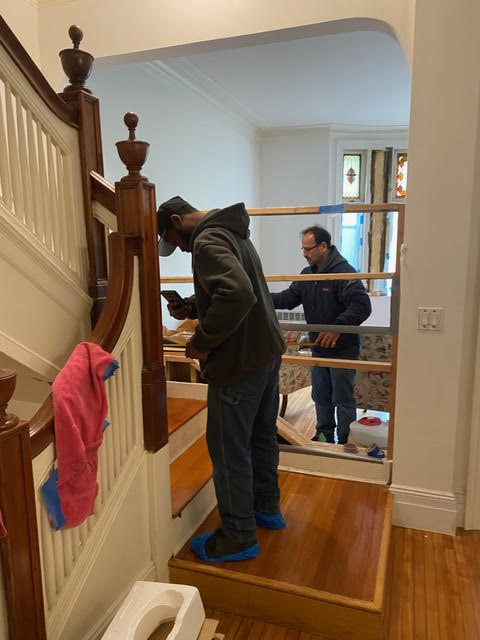
Your staircase is not the same size in July as it is in January. That sounds strange, but it is true. The wood in a New York staircase takes on moisture during humid summers and gives it back during dry, heated winters. It swells, then shrinks, year after year. Most homeowners never notice until a gap opens at a tread, a handrail loosens, or a finish starts to flake. Then comes the worry: did someone build this wrong?
Usually, the answer is no. The movement you are seeing comes from the New York climate, not from bad workmanship. Wood is a living material long after the tree is cut, and it reacts to the air around it. Once you understand that yearly rhythm, the problem stops being a mystery and becomes something you can manage. At Fifty Three Restorations, we have watched this cycle play out in Long Island City row houses, Brooklyn brownstones, and upstate farmhouses since 1990. Here is what is happening inside your stairs, and what good wooden staircase restoration can do about it.
Understanding the Problem: Why Your Staircase Moves With the Seasons
Wood holds water. Even a board that feels bone dry carries moisture inside its cells, and that amount rises and falls with the humidity in the room. The USDA Forest Products Laboratory Wood Handbook explains the rule simply: wood swells when it gains moisture and shrinks when it loses it. Interior wood in a heated, conditioned home settles at roughly 6 to 8 percent moisture content when relative humidity sits in the 30 to 50 percent range. Push the air wetter or drier than that, and the wood follows.
New York gives wood a wild ride. Summers here run warm and sticky, and indoor humidity climbs. Winters bring dry outdoor air plus forced heat, which can drop indoor humidity well below comfortable levels. The Forest Products Laboratory notes that seasonal swings, not daily ones, cause the changes that matter. A staircase quietly expands across the muggy months, then contracts once the radiators come on. That is why a riser that looked perfect in August shows a hairline gap by February.
Here is why this matters for a staircase in particular. Stairs combine many parts cut in different directions: treads, risers, stringers, balusters, newel posts, and handrails. Each part moves a little differently. When they all expand and contract on slightly different schedules, joints work loose and surfaces rub.
Watch for these seasonal signs:
- Gaps that open between treads and risers in winter, then close in summer
- A handrail or baluster that feels loose during the dry months
- Squeaks that come and go with the weather
- Finish that cracks, flakes, or clouds along high-use steps
- Treads that feel slightly cupped or uneven underfoot
- Nail or screw heads that begin to lift above the surface
None of these mean your staircase is failing. They mean it is breathing, the way wood always has.
Common Mistakes New York Homeowners Make
When stairs start moving, people often reach for the wrong fix. These five mistakes show up again and again in New York homes.
- Blaming the builder and ripping things out. Movement is normal. Tearing out a sound staircase over a seasonal gap throws away good wood and good history.
- Caulking every gap shut. Filling a winter gap with hard caulk leaves nowhere for the wood to expand in summer. The joint then buckles or splits.
- Ignoring indoor humidity. Letting winter air drop very dry, or summer air stay very wet, makes the swings larger and the damage worse.
- Screwing loose parts down hard. Cranking a screw into moving wood can crack a baluster or split a tread. The piece needs the right joint, not brute force.
- Refinishing at the wrong time of year. Sanding and coating a staircase at its swollen summer size locks in problems that appear once the wood shrinks back in winter.
Each of these comes from a good instinct, fixing what looks broken, applied without knowing how wood behaves across New York seasons.
The Professional Solution: How Staircase Restoration Works
Good wooden staircase restoration starts with reading the wood, not fighting it. When our team looks at a staircase, we want to know how it moves before we change anything. Our Wood Staircases and Handrails service follows a clear path.
Step one: assessment. We inspect every tread, riser, stringer, baluster, and the handrail. We check moisture content with a meter and look for the difference between seasonal movement and true damage like rot or a failed joint.
Step two: stabilize the structure. Loose treads and squeaks usually trace back to joints that have worked apart. We re-seat and re-glue them, add blocking or wedges where the original work allowed for it, and fasten in ways that still let the wood expand and contract.
Step three: repair and match. Where a part is cracked, worn through, or missing, we repair it or build a new piece to match the original profile. Matching old work is its own skill, and it connects to our Period Reconstructions service for staircases where whole sections need rebuilding.
Step four: surface prep. We strip old failing finish, sand to clean wood, and address any cupping or unevenness. We time this work to the wood's stable state so the results hold.
Step five: finishing. We apply a finish suited to a New York staircase and its traffic, a topic we cover in depth through our Architectural Woodwork Finishes work. The right finish slows moisture exchange and protects the wood through the seasons.
The Forest Products Laboratory makes one point worth repeating: a protective coating can slow seasonal movement, but it cannot stop it. So the goal is never to freeze the wood in place. The goal is to keep it sound, tight, and beautiful while it does what wood does. You can see this approach in our Belvedere Castle project, where careful woodwork met the demands of a heavily used New York landmark.
Why Local New York Experience Matters
A contractor who works in a steady, dry climate may never see the swings a New York staircase goes through. We do, every year. We know that a Long Island City apartment with strong winter heat will dry wood faster than a shaded upstate parlor. We know which finishes hold up against the humidity that rolls in off the water near Long Island City.
New York also adds rules. Many buildings here sit inside historic districts, and the NYC Landmarks Preservation Commission reviews most exterior changes to those properties. Interior staircase work often falls outside that review, but the moment a project touches protected features, the rules apply. Local experience means we know when to check, who to ask, and how to keep your project moving. We have worked alongside the New York Landmarks Conservancy and the Central Park Conservancy, so this terrain is familiar ground.
Cost and Value: What Goes Into Staircase Restoration
Every staircase is different, so honest pricing comes from a real look at the work. Still, you can understand what shapes the figure. These factors move the scope up or down:
- Extent of movement and damage. A few loose treads cost less to address than a staircase with cracked stringers or rot.
- Number of parts. Long runs, curved stairs, and many balusters add labor.
- Matching needs. Building new treads or balusters to match a century-old profile takes more time than a simple repair.
- Finish choice. Some finishes cost more in materials and time but last longer on busy stairs.
- Access and protection. Stairs in a lived-in home need dust control and careful staging.
Here is the value side. A sound staircase is a safety feature first. It is also a centerpiece that buyers and guests notice the moment they walk in. Restoration keeps original wood that you simply cannot buy new, and it costs far less than a full rebuild in most homes. Money spent on careful wooden staircase restoration protects both the people who use the stairs and the character of the New York home around them.
5 Practical Tips You Can Use Today
You do not have to be a woodworker to help your staircase through the New York seasons. Start with these.
- Track your indoor humidity. A small hygrometer costs little. Aim to keep indoor humidity in the 30 to 50 percent band the EPA recommends, which also happens to suit wood.
- Run a humidifier in winter. Dry forced heat is hard on stairs. Adding moisture back softens the seasonal swing.
- Leave gaps alone until you understand them. A winter gap that closes in summer is normal. Do not seal it shut.
- Wipe spills fast. Standing water is the enemy of any wood stair. Dry it within a day.
- Note what changes and when. Jot down when squeaks or gaps appear. That pattern tells a pro whether the cause is seasonal or structural.
Frequently Asked Questions
Is it normal for my New York staircase to gap in winter and tighten in summer? Yes. That seasonal open-and-close is wood reacting to indoor humidity. It becomes a concern only when gaps stay open year round or keep growing.
Can I stop my stairs from moving completely? No, and you would not want to. Wood always moves a little. Good finishing and steady indoor humidity keep the movement small and harmless.
Will controlling humidity really protect my staircase? It helps a great deal. Holding indoor humidity in a steady range shrinks the swings that loosen joints and crack finishes.
My stairs squeak only in the dry months. Is that bad? Seasonal squeaks usually mean joints loosen as the wood shrinks. They are common in older New York homes and are very fixable.
Should I refinish my staircase myself? You can handle small touch-ups, but full refinishing on a New York staircase rewards experience, especially timing the work to the wood's stable season. Our team is glad to take a look.
Customer Success Story
James C, a New York homeowner, came to us with original double-hung windows from around 1790 that had suffered through generations of New York weather. Our team carefully removed, restored, and reinstalled them with new weatherstripping, then took apart and rebuilt a Dutch door from the same era so it worked like new again. "They are expert craftspeople," he told us afterward. The project shows the same principle we bring to staircases: respect the original wood, understand how it moves through New York seasons, and restore it so it lasts another lifetime. Old wood does not need replacing nearly as often as people fear. It needs the right hands.
Fifty Three Restorations Serving the Astoria Community and Beyond in Long Island City
Fifty Three Restorations works to meet the woodworking needs of the local community across Long Island City. With our location near Queens, we proudly handle wooden staircase restoration for homeowners and property owners throughout New York City.
Our shop sits at 38-16 Skillman Ave # B, Long Island City, NY 11101. From there our team reaches clients in Astoria, Sunnyside, Woodside, Greenpoint, and Williamsburg, and we serve customers across Queens, Brooklyn, Manhattan, and the surrounding communities. New York homes deserve woodwork that lasts, and our New York roots run deep.
Quick Access Information
- 📍 About 10 minutes from the Ed Koch Queensboro Bridge and Gantry Plaza State Park
- 🚗 Easy access via the Brooklyn-Queens Expressway (I-278) and Queens Boulevard
- 🌆 Serving residents across Astoria, Sunnyside, and Woodside
We know that finding skilled wooden staircase restoration close to home matters. That is why property owners across New York trust Fifty Three Restorations for reliable, careful work. From Long Island City brownstones to upstate farmhouses, our crews bring the same standards to every project. We have served the New York preservation community since 1990, and partners like the Central Park Conservancy and the New York Landmarks Conservancy have trusted our hands on landmark buildings.
Get Wooden Staircase Restoration Services in Queens Now
Call us today at (212) 566-1053 or contact us online to request a proposal for your project.
Driving Directions from Astoria to Fifty Three Restorations
From Astoria, head south on 31st Street, then connect to Northern Boulevard heading west. Turn onto Skillman Avenue and follow it to 38-16 Skillman Ave # B in Long Island City. Most drivers reach our shop in under 15 minutes. The map below shows the route into our Long Island City location.
<iframe src="https://www.google.com/maps/embed?pb=!1m18!1m12!1m3!1d3022.670979246106!2d-73.9260912!3d40.747264799999996!2m3!1f0!2f0!3f0!3m2!1i1024!2i768!4f13.1!3m3!1m2!1s0x89c25f2822fcc717%3A0xb0f6d7a4c4f548ac!2sFifty%20Three%20Restorations%20Inc!5e0!3m2!1sen!2sph!4v1776106836033!5m2!1sen!2sph" width="600" height="450" style="border:0;" allowfullscreen="" loading="lazy" referrerpolicy="no-referrer-when-downgrade"></iframe>
Business Hours and Contact
Reaching Fifty Three Restorations in Long Island City is simple. Here are the details you need.
- Business name: Fifty Three Restorations
- Address: 38-16 Skillman Ave # B, Long Island City, NY 11101
- Phone: (212) 566-1053
- Email: info@fiftythreerestorations.com
- Website: https://fiftythreerestorations.com
Hours
- Monday to Friday: 8:00 AM to 4:30 PM
- Saturday: By appointment
- Sunday: Closed
Our Long Island City shop serves clients across New York. Call during business hours and a member of our team will talk through your project, answer questions, and set up a site visit. Prefer to write first? Send a note through our contact us online page and we will reply quickly. (Please confirm current hours by phone before visiting.)
Ready to Start Your Project
Noticing seasonal gaps, squeaks, or a finish that has seen better winters? A short conversation can tell you whether your staircase needs a small fix or a full restoration.
Fifty Three Restorations has served New York since 1990, and our Long Island City team is ready to help. Get a proposal today, and let us show you what careful wooden staircase restoration can do for your home. Spots on our project calendar fill up through the busy New York seasons, so reaching out early gives you the best schedule.
Call (212) 566-1053 or contact us online to get a proposal. You can also visit our shop at 38-16 Skillman Ave # B, Long Island City, NY 11101. Your staircase has a story worth keeping, and we would be glad to help you protect it.
Follow Fifty Three Restorations
See more of our New York restoration work and connect with our Long Island City team online.
- Facebook: https://www.facebook.com/iconicnewyorkbuildings
- Instagram: https://www.instagram.com/53restorations/
- LinkedIn: https://www.linkedin.com/company/fifty-three-restorations-inc/
Sources
- USDA Forest Products Laboratory, Wood Handbook (Chapter 13: Drying and Control of Moisture Content and Dimensional Changes) | U.S. Department of Agriculture, Forest Service | 2021 | https://research.fs.usda.gov/treesearch/62261
- A Brief Guide to Mold, Moisture and Your Home | U.S. Environmental Protection Agency | Updated 2024 | https://www.epa.gov/mold/brief-guide-mold-moisture-and-your-home
- Permits and Making Alterations | NYC Landmarks Preservation Commission | Accessed 2026 | https://www.nyc.gov/site/lpc/about/permits-and-making-alterations.page
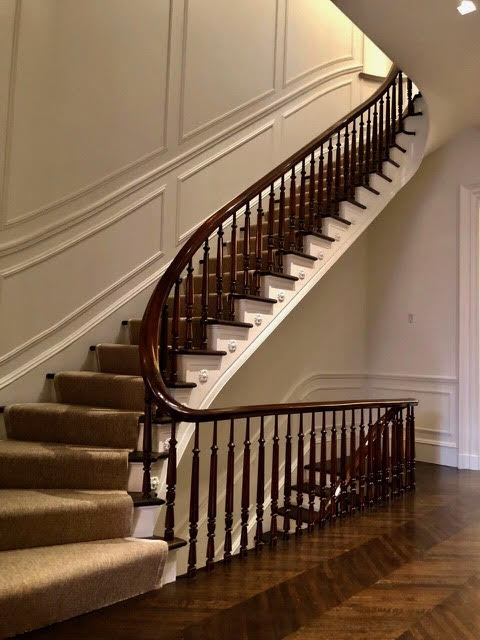
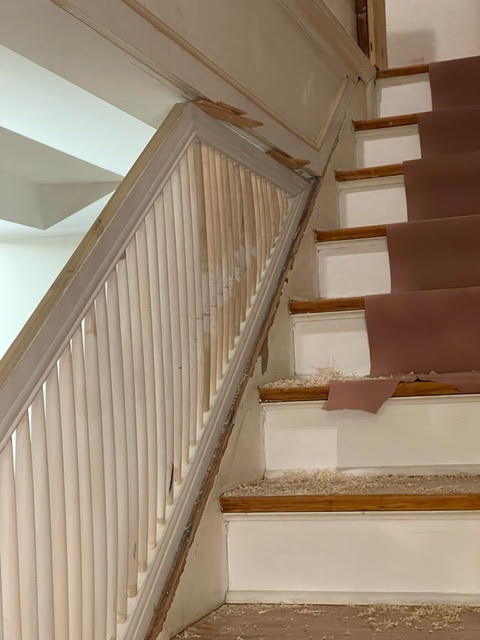
Humidity damage that has already set in — swollen treads, open joints, failing finish — is core Brooklyn wood stair restoration territory.
Related Resources
Explore More Insights

Get Started with Your Project
Contact us today to schedule a consultation.
