

Water Damage, Pests, and Rot: Wood Stair Restoration After Hidden Damage in New York
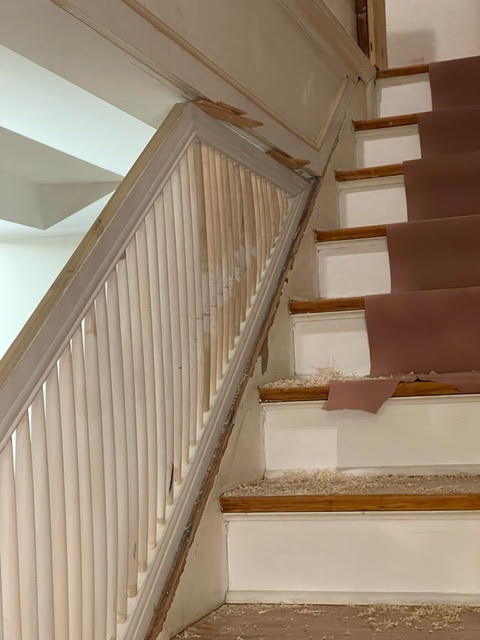
The carpet had been on the stairs for forty years. When our crew finally pulled it up in a New York rowhouse, the homeowners expected dust and old tack strips. What they found instead was soft, dark wood near the bottom three treads, a faint mushroom smell, and a line of pinholes along one stringer where insects had been at work. None of it showed from the top. The carpet had hidden every bit of it, and the moisture trapped underneath had quietly fed the damage for decades.
This is the part of wood stair restoration that catches owners off guard. The trouble you can see is rarely the whole story. Water, pests, and rot do their work where you cannot watch, under carpet, behind paint, inside the closed space beneath the stairs. By the time a tread feels soft or a step sags, the damage has usually spread. At Fifty Three Restorations in Long Island City, we have opened up a lot of New York staircases, and we know how to bring them back. Here is what hidden damage looks like and how wood stair restoration fixes it for good.
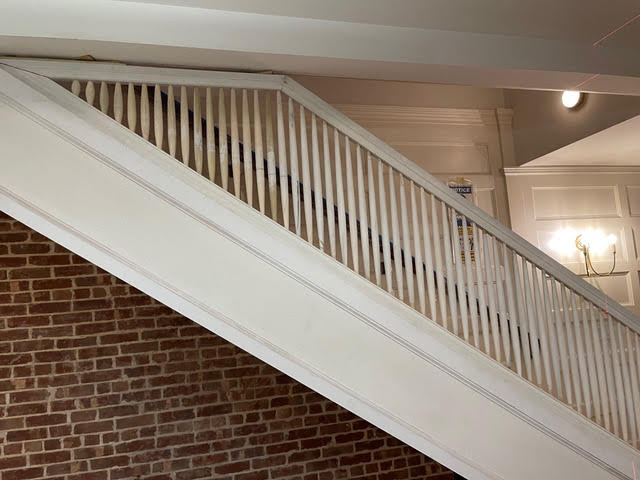
Understanding the Problem: Damage You Cannot See
Hidden stair damage comes from three sources that often travel together: water, pests, and rot. One feeds the next.
Water comes first. A leaky radiator, a damp basement, a roof drip, or decades of mopped-in moisture soaks into wood that never gets a chance to dry. The U.S. Environmental Protection Agency advises keeping indoor humidity below 60 percent, ideally in the 30 to 50 percent range, and drying any wet material within 24 to 48 hours. In an old New York home with a damp cellar under the stairs, wood often sits far wetter than that for years.
Wet wood invites rot. Wood-decay fungi need moisture to live, and they slowly turn solid wood soft, dark, and crumbly. The USDA Forest Products Laboratory describes how wood holds and releases moisture with its surroundings, and wood that stays damp loses the strength that makes a staircase safe.
Pests follow the moisture too. Many wood-boring insects prefer softened, damp wood, so a water problem often becomes a pest problem.
Watch for these signs of hidden trouble:
- A tread or landing that feels soft, spongy, or springy underfoot
- A musty or earthy smell near the staircase
- Dark stains or streaks on the wood or wall nearby
- Small holes, fine sawdust, or tunnels in the wood
- Steps that have started to sag, tilt, or pull away from the wall
Common Mistakes Homeowners Make With Hidden Damage
These five errors let small problems grow into big ones.
- Covering it back up. New carpet or a fresh board over soft wood hides the damage without stopping it. The rot keeps spreading underneath.
- Painting over rot. Paint makes bad wood look fine for a season. The decay continues below the surface.
- Ignoring the smell. A musty odor near the stairs is a warning. Owners who wait usually find worse damage later.
- Treating pests without fixing the water. Insects came for the moisture. Kill them and leave the damp, and they come back.
- Patching only what shows. Soft wood reaches further than the visible spot. A patch that stops at the surface leaves rot behind it.
The Professional Solution: How Wood Stair Restoration Works
Real wood stair restoration follows the damage to its end, not just its edge. Through our Wood Staircases and Handrails service, here is our process.
We find the moisture source first. There is no point repairing wood while water still reaches it. We trace the leak, the damp, or the drainage problem and address it before any wood goes back.
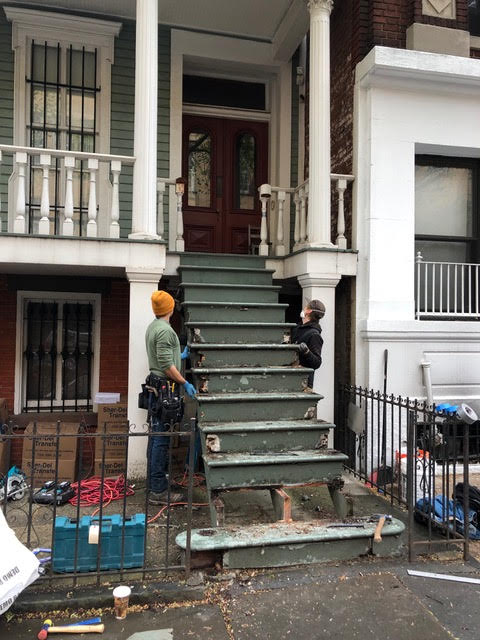
We open up the staircase. We remove carpet, trim, and damaged boards to see the true extent of the rot and pest activity. Hidden damage almost always reaches further than the surface suggests.
We remove every bit of bad wood. Soft, rotted, and insect-eaten wood comes out completely. Leaving any of it invites the problem to return.
We rebuild with matched wood. Through our Period Reconstructions service, we recreate treads, stringers, and balusters to match the original staircase in wood, profile, and detail, so the repair disappears.
We finish for protection. Through our Architectural Woodwork Finishes service, we apply a finish that helps shield the wood and slow future moisture trouble.
We brought this same careful approach to historic projects like our greenhouse restoration project, where old water damage had to be fully removed before any rebuilding began.
Why Local New York Experience Matters
New York housing stock makes hidden stair damage common. Many homes here are a century old or more, built over damp basements and cellars, with stairs that have worn carpet and decades of trapped moisture underneath. Our humid summers keep wood wet longer, and our freeze-thaw winters work moisture deeper into the grain. A local team knows where to look in a New York staircase: the bottom treads near a damp cellar, the stringer against an exterior wall, the landing under a long-gone radiator. Since 1990 we have opened up staircases across Long Island City, Brooklyn, and upstate New York, and that experience tells us how far the rot really goes.
Cost and Value: What Goes Into the Repair
The investment in wood stair restoration after hidden damage depends on what we find:
- Extent of the rot sets how much wood must come out and be rebuilt.
- Structural involvement raises scope if stringers or framing are affected, not just treads.
- Pest damage can widen the area that needs replacing.
- Matching original detail adds careful work on historic staircases.
- The moisture fix itself, from a leak repair to better drainage, factors in.
Here is the value side. Hidden damage never improves on its own. Caught early and repaired right, a wood stair restoration stops the spread, protects the rest of the staircase, and keeps a safe stair underfoot. Left alone, the same damage reaches the structure, and a tread repair becomes a full rebuild. For a New York home, fixing it properly the first time protects both safety and the value of original woodwork that cannot be replaced.
5 Practical Tips You Can Use Today
Catch hidden stair damage before it spreads.
- Walk every step slowly. Press near the open edge of each tread. Any soft or springy spot deserves a closer look.
- Follow your nose. A musty smell near the stairs points to moisture and possible rot. Track down the source.
- Check the space below. Look under the staircase and in the cellar beneath it for damp, stains, or sawdust.
- Control the humidity. Keep indoor humidity in the 30 to 50 percent range and dry any wet spot within a day or two.
- Do not recarpet over a problem. If a stair feels soft, look before you cover. Hiding damage only buys it time to grow.
Frequently Asked Questions
How do I know if my stairs have hidden water damage? Soft or springy treads, a musty smell, dark stains, and sagging steps are the warning signs. A professional can open a small area to confirm how far it reaches.
Can rotted stairs be restored, or do they need full replacement? Most can be restored. We remove the rotted wood, rebuild those parts to match, and keep the sound majority of the staircase. Full replacement is rare.
What causes hidden stair rot in New York homes? Trapped moisture, usually from a damp basement, an old leak, or decades under carpet. Our humid summers and old housing stock make it common here.
Will the repaired section match the rest of my old staircase? Yes. Through our period reconstruction work we match the wood, profile, and detail so the rebuilt parts blend with the original staircase.
Do you treat the pests too, or just the wood? We remove insect-damaged wood and, most importantly, fix the moisture that drew the pests in. Removing the damp is what keeps them from coming back.
Customer Success Story
Anne Leclercq's parish trusted us with a 100-year-old Rose Window, a historic focal point of their church. Vince and our team handled the old, fragile work, coordinated with their glass contractor, and kept the parish coordinator informed at every step. "It was reassuring to work with experienced professionals who care about their work," she said. Hidden stair damage calls for that same patient, careful hand. Old wood with decades of trouble underneath needs a team that takes the time to do it right, and that is the work we bring to every New York staircase.
Fifty Three Restorations Serving the Astoria Community and Beyond in Long Island City
Fifty Three Restorations works to meet the woodworking needs of the local community across Long Island City. With our location near Queens, we proudly handle wood stair restoration and repair for homeowners and property owners throughout New York City.
Our shop sits at 38-16 Skillman Ave # B, Long Island City, NY 11101. From there our team reaches clients in Astoria, Sunnyside, Woodside, Greenpoint, and Williamsburg, and we serve customers across Queens, Brooklyn, Manhattan, and the surrounding communities. New York homes deserve woodwork that lasts, and our New York roots run deep.
Quick Access Information
- 📍 About 10 minutes from the Ed Koch Queensboro Bridge and Gantry Plaza State Park
- 🚗 Easy access via the Brooklyn-Queens Expressway (I-278) and Queens Boulevard
- 🌆 Serving residents across Astoria, Sunnyside, and Woodside
We know that finding skilled wood stair restoration and repair close to home matters. That is why property owners across New York trust Fifty Three Restorations for reliable, careful work. From Long Island City brownstones to upstate farmhouses, our crews bring the same standards to every project. We have served the New York preservation community since 1990, and partners like the Central Park Conservancy and the New York Landmarks Conservancy have trusted our hands on landmark buildings.
Get Wood Stair Restoration Services in Queens Now
Call us today at (212) 566-1053 or contact us online to request a proposal for your project.
Driving Directions from Astoria to Fifty Three Restorations
From Astoria, head south on 31st Street, then connect to Northern Boulevard heading west. Turn onto Skillman Avenue and follow it to 38-16 Skillman Ave # B in Long Island City. Most drivers reach our shop in under 15 minutes. The map below shows the route into our Long Island City location.
<iframe src="https://www.google.com/maps/embed?pb=!1m18!1m12!1m3!1d3022.670979246106!2d-73.9260912!3d40.747264799999996!2m3!1f0!2f0!3f0!3m2!1i1024!2i768!4f13.1!3m3!1m2!1s0x89c25f2822fcc717%3A0xb0f6d7a4c4f548ac!2sFifty%20Three%20Restorations%20Inc!5e0!3m2!1sen!2sph!4v1776106836033!5m2!1sen!2sph" width="600" height="450" style="border:0;" allowfullscreen="" loading="lazy" referrerpolicy="no-referrer-when-downgrade"></iframe>
Business Hours and Contact
Reaching Fifty Three Restorations in Long Island City is simple. Here are the details you need.
- Business name: Fifty Three Restorations
- Address: 38-16 Skillman Ave # B, Long Island City, NY 11101
- Phone: (212) 566-1053
- Email: info@fiftythreerestorations.com
- Website: https://fiftythreerestorations.com
Hours
- Monday to Friday: 8:00 AM to 4:30 PM
- Saturday: By appointment
- Sunday: Closed
Our Long Island City shop serves clients across New York. Call during business hours and a member of our team will talk through your project, answer questions, and set up a site visit. Prefer to write first? Send a note through our contact us online page and we will reply quickly. (Please confirm current hours by phone before visiting.)
Ready to Start Your Project
Soft treads, a musty smell, or damage under old carpet mean it is time to look closer. Wood stair restoration stops the spread and rebuilds it right. Let us take a look.
Fifty Three Restorations has served New York since 1990, and our Long Island City team is ready to help. Get a proposal today, and let us show you what careful wood stair restoration can do for your home. Spots on our project calendar fill up through the busy New York seasons, so reaching out early gives you the best schedule.
Call (212) 566-1053 or contact us online to get a proposal. You can also visit our shop at 38-16 Skillman Ave # B, Long Island City, NY 11101. Your staircase has a story worth keeping, and we would be glad to help you protect it.
Follow Fifty Three Restorations
See more of our New York restoration work and connect with our Long Island City team online.
- Facebook: https://www.facebook.com/iconicnewyorkbuildings
- Instagram: https://www.instagram.com/53restorations/
- LinkedIn: https://www.linkedin.com/company/fifty-three-restorations-inc/
Sources
- A Brief Guide to Mold, Moisture and Your Home | U.S. Environmental Protection Agency | Updated 2024 | https://www.epa.gov/mold/brief-guide-mold-moisture-and-your-home
- USDA Forest Products Laboratory, Wood Handbook (Chapter 13: Drying and Control of Moisture Content and Dimensional Changes) | U.S. Department of Agriculture, Forest Service | 2021 | https://research.fs.usda.gov/treesearch/62261
Explore More Insights
Get Started with Your Project
Contact us today to schedule a consultation.
