

Signs Your Wooden Staircase Needs Restoration Before It Becomes a Safety Hazard
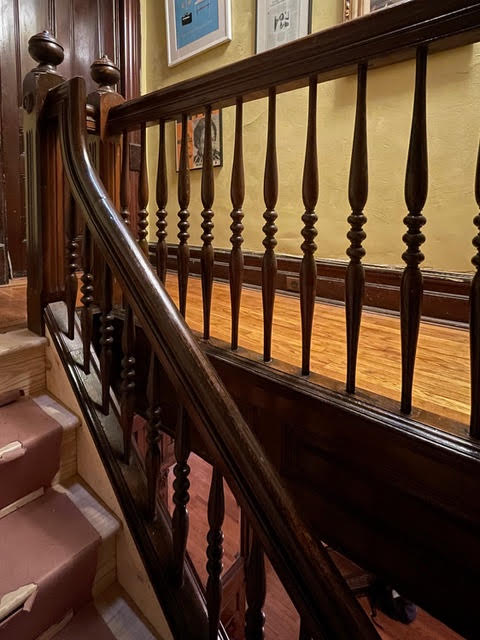
Take two minutes and walk your staircase right now. Step on each tread near the wall, then near the open edge. Grip the handrail and give it a firm shake. Wiggle a few balusters. Listen for new squeaks. If anything feels loose, soft, or wrong, your staircase is trying to tell you something before it becomes a safety hazard.
Stairs are one of the most common places people get hurt at home. A peer-reviewed study in the American Journal of Emergency Medicine estimated that more than one million people are treated in United States emergency departments for stair-related injuries every year, with the highest rates among young children and older adults. Most of those falls trace back to problems that started small and went ignored. Good staircase restoration catches those problems early. At Fifty Three Restorations in Long Island City, we would rather fix a loose tread today than meet you after a fall. Here is what to look for.
Understanding the Problem: Small Issues Become Big Risks
A wooden staircase rarely fails all at once. It fails one ignored detail at a time. A handrail loosens. A tread cups. A finish wears slick. Each one alone seems minor, so it waits. Then a guest reaches for the rail that gives, or a foot catches the lip of a worn tread, and minor becomes serious.
Why does this happen in New York homes so often? Age and use. Many staircases here have carried traffic for decades, and New York humidity moves the wood with every season, loosening joints over time. The Centers for Disease Control and Prevention reports that falls are the leading cause of injury for adults 65 and older, with about three million older adults treated in emergency departments each year. A staircase that is no longer tight and even raises that risk inside your own home.
Run through this checklist on your own stairs:
- A handrail that shifts, leans, or feels loose when you pull it
- Balusters that rattle or are missing entirely
- Treads that feel soft, spongy, cupped, or uneven
- A nosing, the front lip of a tread, that is worn round or splitting
- Finish that has worn slick and slippery on the walking path
- Visible cracks in treads, risers, or stringers
- Nail or screw heads lifting above the surface
- A staircase that bounces or sways when you climb it
Any single item is worth a closer look. Several together mean it is time to call.
Common Mistakes Homeowners Make With Aging Stairs
These five habits turn small stair problems into real hazards.
- Treating a loose rail as cosmetic. A handrail is a safety device. A loose one is the most dangerous defect on any staircase.
- Tolerating worn, slick treads. A polished walking path looks fine and slides feet right out. Traction matters more than shine.
- Living with a missing baluster. A gap in the railing is an open invitation for a child or a fall. It needs filling.
- Patching with mismatched parts. A quick fix that does not seat properly can loosen again fast and hide worse trouble underneath.
- Waiting for the bounce to get worse. A staircase that flexes underfoot has a structural issue. That one never improves on its own.
The Professional Solution: How Staircase Restoration Works
When safety is the concern, our Wood Staircases and Handrails service starts with the parts that keep people upright.
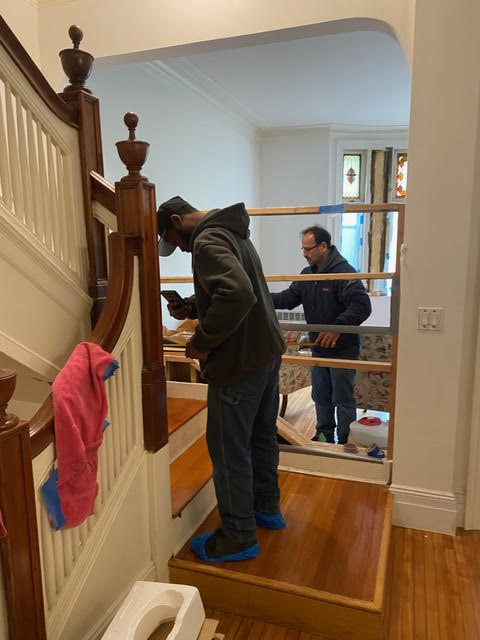
Inspection. We test every tread, riser, baluster, and the full handrail. We find the difference between a tread that is merely worn and one that is structurally weak.
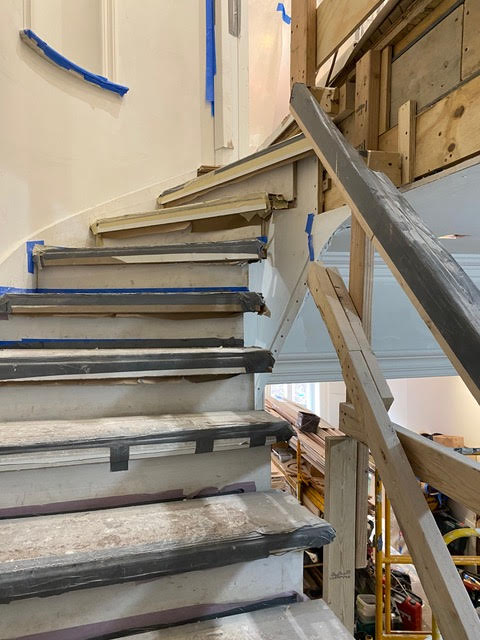
Securing the railing. A solid handrail and tight balusters come first. We re-anchor newel posts, secure the rail, and replace or rebuild any missing balusters so the railing protects the whole run.
Stabilizing the treads. Loose, cupped, or squeaking treads get re-seated, re-glued, and fastened so they sit flat and quiet. Where a tread is too far gone, we repair or rebuild it.
Restoring traction and surface. We address slick, worn nosings and refinish the walking surface so it grips. Finish choice matters here, which is why our Architectural Woodwork Finishes service pairs looks with daily safety.
Structural repair when needed. Cracked stringers or a swaying staircase get real structural attention, and full rebuilds of a section fall under our Period Reconstructions work.
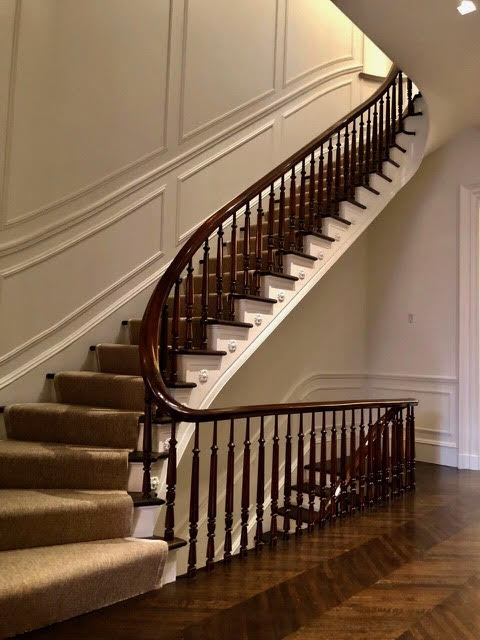
The result is a staircase that is sound, even, and safe, and that still looks like it belongs in your home. Our Belvedere Castle project shows how we handle stairs and woodwork that face heavy, constant use.
Why Local New York Experience Matters
A New York staircase ages in New York conditions. Strong seasonal humidity swings loosen joints faster here than in a steady, dry climate. Older New York housing stock also hides surprises: past water damage under carpet, layers of paint over original wood, repairs done quickly by earlier owners. We have seen these patterns across Long Island City, Brooklyn, and beyond since 1990, so we know where the real risks hide. That experience turns a quick inspection into an accurate one.
Cost and Value: What Goes Into Staircase Restoration
A clear price follows a real inspection. The scope depends on a few things:
- Whether the problem is safety-cosmetic or structural. Securing a rail costs far less than rebuilding a stringer.
- How many parts need work. A run with several loose balusters and worn treads adds labor.
- The amount of matching. Recreating missing balusters or a tread profile takes skilled time.
- Finish and traction work. Refinishing the walking path for grip adds materials and hours.
The value is plain. A safe staircase protects everyone in the home, especially children and older adults, the two groups most often hurt on stairs. Restoration also costs less than a full rebuild while keeping the original character of your New York home. Spending on staircase restoration is spending on safety you use every single day.
5 Practical Tips You Can Use Today
You can lower your stair risk this week with simple steps.
- Do the two-minute test. Step every tread, shake the rail, wiggle the balusters. Note anything that moves.
- Add traction at once. Until repairs happen, a non-slip runner on slick treads buys you safety.
- Light the stairs well. Many falls come from missed footing. Good lighting top and bottom helps everyone.
- Fix the rail first. If only one thing gets attention now, make it a loose handrail.
- Keep the path clear. No shoes, toys, or clutter on the steps. The simplest fall prevention there is.
Frequently Asked Questions
How do I know if my staircase is actually unsafe? Loose railings, soft or cupped treads, missing balusters, and a staircase that bounces are the clearest warning signs. Any of these calls for a professional look.
My handrail wobbles a little. Is that urgent? Yes. A handrail is your main protection on stairs. A wobble means it cannot do its job in a slip, so treat it as a priority.
Are slick stairs really dangerous? Very. A worn, slippery walking path is a leading cause of stair falls. Restoring traction is a real safety upgrade.
Can you fix just the unsafe parts? We can. Many homeowners start with railings and treads for safety, then plan finishing later. We work with your priorities.
Who is most at risk on worn stairs? National data points to young children and older adults as the groups most often injured on stairs, so households with either should act early.
Customer Success Story
James C trusted us with original double-hung windows from around 1790 and a Dutch door of the same era. Our team removed, restored, and reinstalled the windows with new weatherstripping, then took apart and rebuilt the door so it worked like new. "They are expert craftspeople," he said. The lesson carries straight to staircases: parts that look beyond saving often have plenty of life once skilled hands address the real problems. A staircase is no different. The right repair, done early, keeps the whole family safer for years.
Fifty Three Restorations Serving the Astoria Community and Beyond in Long Island City
Fifty Three Restorations works to meet the woodworking needs of the local community across Long Island City. With our location near Queens, we proudly handle staircase restoration for homeowners and property owners throughout New York City.
Our shop sits at 38-16 Skillman Ave # B, Long Island City, NY 11101. From there our team reaches clients in Astoria, Sunnyside, Woodside, Greenpoint, and Williamsburg, and we serve customers across Queens, Brooklyn, Manhattan, and the surrounding communities. New York homes deserve woodwork that lasts, and our New York roots run deep.
Quick Access Information
- 📍 About 10 minutes from the Ed Koch Queensboro Bridge and Gantry Plaza State Park
- 🚗 Easy access via the Brooklyn-Queens Expressway (I-278) and Queens Boulevard
- 🌆 Serving residents across Astoria, Sunnyside, and Woodside
We know that finding skilled staircase restoration close to home matters. That is why property owners across New York trust Fifty Three Restorations for reliable, careful work. From Long Island City brownstones to upstate farmhouses, our crews bring the same standards to every project. We have served the New York preservation community since 1990, and partners like the Central Park Conservancy and the New York Landmarks Conservancy have trusted our hands on landmark buildings.
Get Staircase Restoration Services in Queens Now
Call us today at (212) 566-1053 or contact us online to request a proposal for your project.
Driving Directions from Astoria to Fifty Three Restorations
From Astoria, head south on 31st Street, then connect to Northern Boulevard heading west. Turn onto Skillman Avenue and follow it to 38-16 Skillman Ave # B in Long Island City. Most drivers reach our shop in under 15 minutes. The map below shows the route into our Long Island City location.
<iframe src="https://www.google.com/maps/embed?pb=!1m18!1m12!1m3!1d3022.670979246106!2d-73.9260912!3d40.747264799999996!2m3!1f0!2f0!3f0!3m2!1i1024!2i768!4f13.1!3m3!1m2!1s0x89c25f2822fcc717%3A0xb0f6d7a4c4f548ac!2sFifty%20Three%20Restorations%20Inc!5e0!3m2!1sen!2sph!4v1776106836033!5m2!1sen!2sph" width="600" height="450" style="border:0;" allowfullscreen="" loading="lazy" referrerpolicy="no-referrer-when-downgrade"></iframe>
Business Hours and Contact
Reaching Fifty Three Restorations in Long Island City is simple. Here are the details you need.
- Business name: Fifty Three Restorations
- Address: 38-16 Skillman Ave # B, Long Island City, NY 11101
- Phone: (212) 566-1053
- Email: info@fiftythreerestorations.com
- Website: https://fiftythreerestorations.com
Hours
- Monday to Friday: 8:00 AM to 4:30 PM
- Saturday: By appointment
- Sunday: Closed
Our Long Island City shop serves clients across New York. Call during business hours and a member of our team will talk through your project, answer questions, and set up a site visit. Prefer to write first? Send a note through our contact us online page and we will reply quickly. (Please confirm current hours by phone before visiting.)
Ready to Start Your Project
Did the two-minute test turn up a loose rail, a soft tread, or a missing baluster? Do not wait for a fall. A quick visit can make your staircase safe again.
Fifty Three Restorations has served New York since 1990, and our Long Island City team is ready to help. Get a proposal today, and let us show you what careful staircase restoration can do for your home. Spots on our project calendar fill up through the busy New York seasons, so reaching out early gives you the best schedule.
Call (212) 566-1053 or contact us online to get a proposal. You can also visit our shop at 38-16 Skillman Ave # B, Long Island City, NY 11101. Your staircase has a story worth keeping, and we would be glad to help you protect it.
Follow Fifty Three Restorations
See more of our New York restoration work and connect with our Long Island City team online.
- Facebook: https://www.facebook.com/iconicnewyorkbuildings
- Instagram: https://www.instagram.com/53restorations/
- LinkedIn: https://www.linkedin.com/company/fifty-three-restorations-inc/
Sources
- Stair-related injuries treated in United States emergency departments | American Journal of Emergency Medicine (Blazewick et al.) | 2018 | https://pubmed.ncbi.nlm.nih.gov/28947224/
- Facts About Falls | Centers for Disease Control and Prevention | 2024 | https://www.cdc.gov/falls/data-research/facts-stats/index.html
- USDA Forest Products Laboratory, Wood Handbook (Chapter 13: Drying and Control of Moisture Content and Dimensional Changes) | U.S. Department of Agriculture, Forest Service | 2021 | https://research.fs.usda.gov/treesearch/62261
Explore More Insights
Get Started with Your Project
Contact us today to schedule a consultation.
