

Squeaky Stairs in Older NYC Homes: Causes and Lasting Fixes
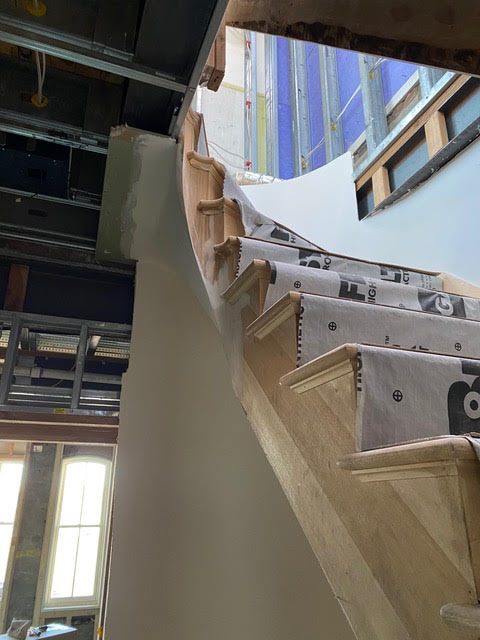
You know the step. Third from the top, maybe fourth from the bottom. The one that announces you to the whole house when you come in late. Every older New York home seems to have one, and most people just learn to skip it. But that squeak is not a quirk. It is a small report on what the wood is doing, and in an older NYC staircase it usually means joints are loosening as the wood moves.
The good news: a squeak is one of the most fixable problems a staircase has, when the fix addresses the cause instead of the noise. The bad news: most quick fixes only quiet it for a season. At Fifty Three Restorations in Long Island City, squeaky stair repair is steady work across New York's older homes, and we fix squeaks so they stay fixed. Let's break it down.
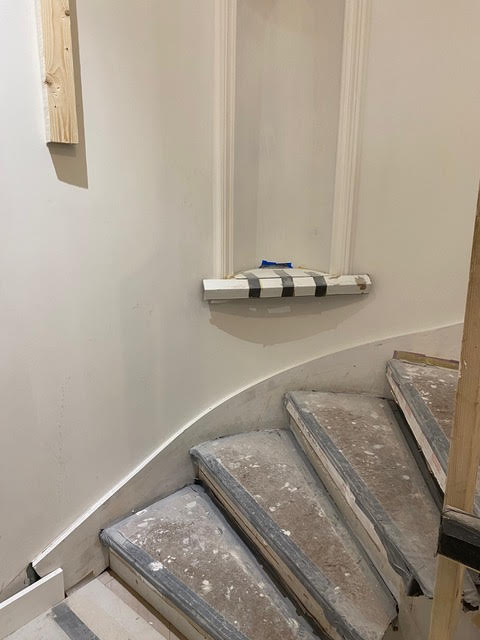
Understanding the Problem: What Makes a Stair Squeak
A squeak is the sound of two pieces of wood, or a nail and wood, rubbing as you load the step. When a staircase was new, every joint sat tight. Over decades, those joints work loose, and the loose parts move against each other under your weight. That movement makes the noise.
Why do older NYC staircases loosen? The USDA Forest Products Laboratory explains the core reason: wood swells and shrinks as indoor humidity rises and falls through the seasons, and these seasonal changes, repeated for years, slowly open joints that were once tight. New York's humid summers and dry, heated winters give wood a strong yearly push and pull. Add decades of foot traffic, and joints that once gripped now slip.
The usual squeak sources are:
- A tread that has separated slightly from the riser behind or below it
- A tread pulling away from the stringer it rests on
- Loose wedges or glue blocks under the stairs that no longer hold
- Nails that have worked loose and now rub against the wood
- A loose baluster or handrail joint moving as you grip it
Here is the thing worth knowing: the squeak you hear at the top of a tread often comes from a joint at the back or underside you cannot see. That is why guessing rarely works for long.
Common Mistakes People Make With Squeaky Stairs
Squeaks tempt everyone toward the easy fix. These five usually fail.
- Dumping talc or powder in the gap. Powder dampens the rub for a few weeks, then the squeak returns. It treats the symptom, not the loose joint.
- Driving a fresh nail straight down. A new nail into moving wood can split the tread and often loosens again, leaving two problems.
- Soaking the joint in wood glue from the top. Glue dribbled on the surface rarely reaches the joint that is actually moving.
- Tightening with random screws. Screws in the wrong spot can crack a tread or baluster and miss the real connection.
- Ignoring it for years. A squeak is an early sign of a loosening joint. Left alone, that joint keeps working apart and can become a loose, unsafe tread.
The Professional Solution: How Lasting Squeak Repair Works
A squeak that stays gone comes from fixing the joint, not muffling the noise. Our Wood Staircases and Handrails service handles it methodically.
We find the real source. We load each tread and locate exactly which joint moves. Where we can reach the underside of the staircase, we inspect the wedges, glue blocks, and stringer connections directly.
We work from below when we can. The strongest, most invisible repairs happen from under the stairs. We re-glue and replace loose wedges and blocks, and re-secure treads to stringers without touching the visible surface at all.
We re-seat from above when needed. Where there is no access below, we secure the tread properly from the top, placing and concealing fasteners so the repair holds and stays hidden.
We fix loose railings too. A squeak at the handrail or a baluster gets its joint re-glued and re-seated, since a moving railing is both noisy and a safety matter.
We finish to match. Any spot that needs touch-up blends into the existing finish through our Architectural Woodwork Finishes service, so the repair disappears.
Because we fix the cause, the step goes quiet and stays quiet. Where loosening has gone far enough to threaten a tread, our Period Reconstructions service can rebuild the affected section. You can see our care with heavily used New York woodwork in the greenhouse restoration project.
Why Local New York Experience Matters
Older NYC homes share traits a local team learns to read. We know the typical stair construction in pre-war buildings and brownstones, where the wedges and blocks sit, and how decades of New York humidity have treated them. We also know that a Long Island City apartment with strong winter heat dries wood faster, opening joints sooner, than a milder room. That pattern recognition lets us find a squeak's true source quickly instead of chasing the noise around the staircase. Since 1990 we have worked inside New York's older homes, and that history shortens the hunt.
Cost and Value: What Goes Into Squeaky Stair Repair
Squeak repair is often one of the more affordable staircase services, though the figure depends on a few things:
- Access. Repairs from an open underside are simpler than work on a fully closed staircase.
- How many steps squeak. One noisy tread is quick. A whole run that has loosened takes longer.
- What loosened. Re-gluing wedges differs from rebuilding a tread that has worn or cracked.
- Finish touch-up. Blending any surface repair into the existing finish adds a little time.
The value runs past the quiet. A squeak is an early warning that a joint is loosening, and addressing it early stops that joint from working into a loose, unsafe tread later. So squeak repair is partly comfort and partly prevention. Quieting your stairs today protects the staircase, and the people on it, down the road.
5 Practical Tips You Can Use Today
While you plan a lasting fix, these help.
- Map your squeaks. Mark which treads talk and exactly where on each one. That map speeds an accurate repair.
- Check underneath. If your staircase has an open underside, look for loose wedges and blocks. You may spot the culprit.
- Skip the powder trick. It only buys weeks and can build up grit in the joint.
- Watch the seasons. Note whether squeaks worsen in dry winter months. That tells a pro the cause is seasonal wood movement.
- Steady your humidity. Keeping indoor humidity in a stable range slows the movement that loosens joints in the first place.
Frequently Asked Questions
Why does my stair squeak only in winter? Dry winter air shrinks the wood, which opens joints that were tight in humid summer. Seasonal squeaks are very common in older New York homes.
Can a squeak really be fixed for good? Yes, when the repair fixes the loose joint rather than masking the sound. That is the difference between a powder trick and proper squeak repair.
Is a squeaky stair dangerous? Not by itself, but it signals a loosening joint. Left for years, that joint can work into a loose tread, which is a safety issue.
Do you have to tear up my staircase to fix a squeak? Usually not. Many squeaks are fixed from underneath with no visible change, or from above with concealed fasteners.
My whole staircase squeaks. Is that worse? It means several joints have loosened, often from years of seasonal movement. It is still very fixable, just a larger repair than a single step.
Customer Success Story
When Asbury United Methodist Church needed careful work on a 100-year-old Rose Window, they called Fifty Three Restorations. Anne Leclercq recalled how our team, led by Vince, coordinated with the glass contractor, communicated clearly with the parish, and finished on time. "It was reassuring to work with experienced professionals who care about their work," she said. The same patience that protects a century-old window finds and fixes a stubborn stair squeak at its source. We do not chase noises. We find the loose joint, repair it the right way, and leave the staircase quiet and sound.
Fifty Three Restorations Serving the Astoria Community and Beyond in Long Island City
Fifty Three Restorations works to meet the woodworking needs of the local community across Long Island City. With our location near Queens, we proudly handle squeaky stair repair for homeowners and property owners throughout New York City.
Our shop sits at 38-16 Skillman Ave # B, Long Island City, NY 11101. From there our team reaches clients in Astoria, Sunnyside, Woodside, Greenpoint, and Williamsburg, and we serve customers across Queens, Brooklyn, Manhattan, and the surrounding communities. New York homes deserve woodwork that lasts, and our New York roots run deep.
Quick Access Information
- 📍 About 10 minutes from the Ed Koch Queensboro Bridge and Gantry Plaza State Park
- 🚗 Easy access via the Brooklyn-Queens Expressway (I-278) and Queens Boulevard
- 🌆 Serving residents across Astoria, Sunnyside, and Woodside
We know that finding skilled squeaky stair repair close to home matters. That is why property owners across New York trust Fifty Three Restorations for reliable, careful work. From Long Island City brownstones to upstate farmhouses, our crews bring the same standards to every project. We have served the New York preservation community since 1990, and partners like the Central Park Conservancy and the New York Landmarks Conservancy have trusted our hands on landmark buildings.
Get Squeaky Stair Repair Services in Queens Now
Call us today at (212) 566-1053 or contact us online to request a proposal for your project.
Driving Directions from Astoria to Fifty Three Restorations
From Astoria, head south on 31st Street, then connect to Northern Boulevard heading west. Turn onto Skillman Avenue and follow it to 38-16 Skillman Ave # B in Long Island City. Most drivers reach our shop in under 15 minutes. The map below shows the route into our Long Island City location.
<iframe src="https://www.google.com/maps/embed?pb=!1m18!1m12!1m3!1d3022.670979246106!2d-73.9260912!3d40.747264799999996!2m3!1f0!2f0!3f0!3m2!1i1024!2i768!4f13.1!3m3!1m2!1s0x89c25f2822fcc717%3A0xb0f6d7a4c4f548ac!2sFifty%20Three%20Restorations%20Inc!5e0!3m2!1sen!2sph!4v1776106836033!5m2!1sen!2sph" width="600" height="450" style="border:0;" allowfullscreen="" loading="lazy" referrerpolicy="no-referrer-when-downgrade"></iframe>
Business Hours and Contact
Reaching Fifty Three Restorations in Long Island City is simple. Here are the details you need.
- Business name: Fifty Three Restorations
- Address: 38-16 Skillman Ave # B, Long Island City, NY 11101
- Phone: (212) 566-1053
- Email: info@fiftythreerestorations.com
- Website: https://fiftythreerestorations.com
Hours
- Monday to Friday: 8:00 AM to 4:30 PM
- Saturday: By appointment
- Sunday: Closed
Our Long Island City shop serves clients across New York. Call during business hours and a member of our team will talk through your project, answer questions, and set up a site visit. Prefer to write first? Send a note through our contact us online page and we will reply quickly. (Please confirm current hours by phone before visiting.)
Ready to Start Your Project
Tired of the step that gives you away? A lasting fix starts with finding the real source. Let our team quiet your staircase for good.
Fifty Three Restorations has served New York since 1990, and our Long Island City team is ready to help. Get a proposal today, and let us show you what careful squeaky stair repair can do for your home. Spots on our project calendar fill up through the busy New York seasons, so reaching out early gives you the best schedule.
Call (212) 566-1053 or contact us online to get a proposal. You can also visit our shop at 38-16 Skillman Ave # B, Long Island City, NY 11101. Your staircase has a story worth keeping, and we would be glad to help you protect it.
Follow Fifty Three Restorations
See more of our New York restoration work and connect with our Long Island City team online.
- Facebook: https://www.facebook.com/iconicnewyorkbuildings
- Instagram: https://www.instagram.com/53restorations/
- LinkedIn: https://www.linkedin.com/company/fifty-three-restorations-inc/
Sources
- USDA Forest Products Laboratory, Wood Handbook (Chapter 13: Drying and Control of Moisture Content and Dimensional Changes) | U.S. Department of Agriculture, Forest Service | 2021 | https://research.fs.usda.gov/treesearch/62261
- A Brief Guide to Mold, Moisture and Your Home | U.S. Environmental Protection Agency | Updated 2024 | https://www.epa.gov/mold/brief-guide-mold-moisture-and-your-home
Persistent squeaks that survive these fixes usually mean loose joinery or worn treads — a good point to bring in a Brooklyn staircase restoration specialist.
Related Resources
Explore More Insights

Get Started with Your Project
Contact us today to schedule a consultation.
