

How Much Does Wooden Staircase Restoration Cost in NYC? (2026 Pricing Guide)
.jpg)
Every wooden staircase in New York has a price tag hanging over it, even if nobody has said the number out loud yet. Maybe the treads in your Park Slope brownstone have worn hollow in the middle. Maybe the handrail in your Queens colonial wobbles when you grip it. At some point every owner asks the same question: what will it cost to fix this properly?
The honest answer is that staircase work ranges from a few hundred dollars for small repairs to well into five figures for a full historic restoration. The useful answer is understanding where your staircase sits on that range and why. At Fifty Three Restorations in Long Island City, we price staircase projects across New York City every week, and the same handful of factors drives nearly every estimate.
Request a complimentary proposal for your staircase project.
Typical Cost Ranges Across the NYC Market in 2026
These ranges reflect what homeowners and property owners generally see across the New York City market. They are not quotes. Every staircase is different, and a firm number only comes after someone looks at yours.
- Minor repairs (a few loose treads, squeaks, small glue-ups): roughly $300 to $1,200. This covers isolated joint repairs, wedge and block work, and localized touch-ups.
- Refinishing a standard straight run: roughly $1,500 to $4,500. Stripping or sanding, minor repairs, and a new finish on treads, risers, and rail.
- Restoration with repairs and refinishing: roughly $4,000 to $10,000. Adds baluster and newel repairs, tread replacement in kind, stain and color matching, and more involved carpentry.
- Full historic restoration or partial rebuild: $10,000 to $25,000 and up. Curved stairs, extensive rot or structural repair, custom-turned components, and landmark-grade detail work live here.
If those ranges feel wide, that is because the work is wide. A 12-tread straight run in an Astoria two-family and a curved mahogany stair in a Brooklyn Heights townhome are both "staircase restoration," but they are not the same job.
What Drives the Price Up or Down
Five factors move a staircase estimate more than anything else.
- Scope of work. Refinishing the walking surface costs far less than rebuilding stringers or replacing treads in kind. Scope is the single biggest lever.
- Access. An open underside lets a craftsperson fix joints from below in a fraction of the time a closed staircase allows. Finished basements, plaster soffits, and tight brownstone layouts all add labor.
- Wood species and matching. Common oak treads are straightforward. Matching century-old heart pine, mahogany, or chestnut, both in species and in aged color, takes sourcing skill and shop time.
- Hidden damage. Water, pests, and rot rarely announce themselves fully until the finish comes off. Our post on restoring wooden stairs after hidden damage covers the warning signs worth checking before you budget.
- Finish and detail level. A clear satin finish on plain treads is one price. Hand-rubbed finishes, stain matching to adjacent woodwork, and reproducing turned balusters are another.
Refinishing, Restoration, or Rebuild: What Each Level Includes
People use these words loosely, and the confusion costs money. Here is how we draw the lines.
Refinishing keeps every piece of your existing staircase and renews the surface: strip or sand, minor joint tightening, stain, and topcoat. It suits stairs that are structurally sound but cosmetically tired.
Restoration keeps the staircase's historic fabric but repairs or replaces individual components in kind: new treads milled to match, balusters turned to the original profile, joints rebuilt, then everything finished to blend.
Rebuild replaces the structure itself. This is the right call when stringers have failed, when past remodels butchered the original stair beyond saving, or when a layout change is planned.
Our refinishing vs. replacing guide walks through the decision in more detail, and our Wood Staircases and Handrails service covers all three levels.
Why NYC Pricing Differs From National Averages
National cost websites routinely lowball New York work, and it is worth knowing why before you budget from one.
Labor and insurance costs in New York City run well above national averages, and legitimate restoration shops carry real coverage for working in occupied homes.
Access logistics are a line item here. Walk-up buildings, limited parking, co-op work-hour rules, and certificate-of-insurance requirements all add time that a suburban shop never sees.
- Older building stock. Much of NYC's housing predates 1940. Older stairs mean old-growth lumber, mortise-and-tenon joinery, and surprises under the finish, all of which demand skilled hands rather than production speed.
- Landmark and co-op approvals. In designated districts and many co-ops, documentation and approval steps add administrative time to even modest projects.
The practical takeaway: use national figures only as a floor, and expect New York work to sit above them.
How to Get an Accurate Quote for Your Staircase
A responsible estimate follows a predictable path, and you can speed it up.
- Take clear photos. Shoot the full run from top and bottom, the underside if it is accessible, and close-ups of any damage, gaps, or wear.
- Note the history. Rough age of the building, any past stair work you know about, and whether the home is in a landmark district or a co-op with alteration rules.
- Schedule a site visit. Photos get a ballpark. A visit gets a number, because access, hidden damage, and joinery only reveal themselves in person.
- Ask for a written scope. A real proposal names what is included: which components are repaired versus replaced, what finish system is used, and what is excluded.
- Compare scopes, not just totals. A lower number that omits baluster repair or color matching is not a lower price for the same job.
Why Local New York Experience Matters
Staircase pricing is partly woodworking and partly building science, and New York adds a third layer: knowing the building stock. A crew that has worked inside hundreds of pre-war apartments, brownstones, and colonials recognizes the construction era from the joinery, predicts what is under a painted stringer, and plans for the quirks that out-of-area contractors discover on day three.
Since 1990, Fifty Three Restorations has restored woodwork in New York's older homes and landmark buildings, from brownstone entrance stairs to Central Park structures. That history means our estimates account for what is actually inside your walls, not what a national average imagines.
Frequently Asked Questions
Is it cheaper to refinish or replace a wooden staircase in NYC?
Refinishing is almost always the least expensive path when the staircase is structurally sound, typically a fraction of replacement cost. Replacement only pencils out when the structure has failed or the layout is changing.
Do I need a permit for staircase restoration in New York City?
Routine refinishing and in-kind repair of an interior stair generally does not trigger a permit, but structural changes and work in landmark-designated buildings can require filings. Confirm the specifics with your contractor and, where relevant, the Landmarks Preservation Commission before work starts.
How long does a typical staircase restoration take?
Minor repairs can finish in a day. Refinishing a straight run usually takes several days on site plus curing time before heavy use. Full restorations run longer, often with shop-fabricated components prepared off site to limit disruption in your home.
Will restoring my original staircase add value to my NYC home?
Original architectural details are a selling point in New York's older housing stock, and a sound, well-finished staircase improves both safety and first impressions. Exact value depends on the home and market, but preserving original fabric is rarely money wasted.
Can I stay in my home during the work?
Usually yes. Expect the staircase to be off-limits or limited-use during active work and finish curing, plus dust-control measures around the work zone. Your contractor should give you a day-by-day access plan before starting.
Project Spotlight: Dean Street, Brooklyn
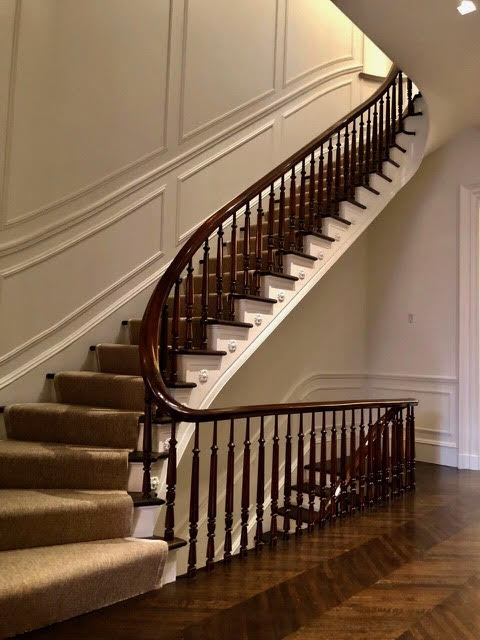
Our Dean Street staircase restoration in Brooklyn shows what careful budgeting and craft look like in practice: original fabric retained wherever it was sound, damaged components replaced in kind, and a finish matched to the home's surviving woodwork. It is the approach we bring to every estimate, keep what is worth keeping, replace only what is not, and price it honestly.
Fifty Three Restorations Serving the Sunnyside Community and Beyond in Long Island City
Fifty Three Restorations works to meet the woodworking needs of the local community across Long Island City. From our shop near Queens, we proudly handle staircase restoration for homeowners and property owners throughout New York City.
Our shop sits at 38-16 Skillman Ave # B, Long Island City, NY 11101. From there our team reaches clients in Sunnyside, Astoria, Woodside, Greenpoint, and Williamsburg, and we serve customers across Queens, Brooklyn, Manhattan, and the surrounding communities.
Quick Access Information
- 📍 About 10 minutes from the Ed Koch Queensboro Bridge and Gantry Plaza State Park
- 🚗 Easy access via the Brooklyn-Queens Expressway (I-278) and Queens Boulevard
- 🌆 Serving residents across Sunnyside, Astoria, and Woodside
Driving Directions from Sunnyside to Fifty Three Restorations
<iframe src="https://www.google.com/maps/embed?pb=!1m18!1m12!1m3!1d3022.670979246106!2d-73.9260912!3d40.747264799999996!2m3!1f0!2f0!3f0!3m2!1i1024!2i768!4f13.1!3m3!1m2!1s0x89c25f2822fcc717%3A0xb0f6d7a4c4f548ac!2sFifty%20Three%20Restorations%20Inc!5e0!3m2!1sen!2sph!4v1776106836033!5m2!1sen!2sph" width="600" height="450" style="border:0;" allowfullscreen="" loading="lazy" referrerpolicy="no-referrer-when-downgrade"></iframe>
From Sunnyside, head west on Queens Boulevard toward Long Island City, then turn onto Skillman Avenue and follow it to 38-16 Skillman Ave # B. Most drivers reach our shop in under 15 minutes.
Business Hours and Contact
- Business name: Fifty Three Restorations
- Address: 38-16 Skillman Ave # B, Long Island City, NY 11101
- Phone: (212) 566-1053
- Email: info@fiftythreerestorations.com
- Website: https://fiftythreerestorations.com
Hours
Monday to Friday: 8:00 AM to 4:30 PM
Saturday: By appointment
Sunday: Closed
Call during business hours and a member of our team will talk through your project, answer questions, and set up a site visit. Prefer to write first? Send a note through our Contact Us page and we will reply quickly. (Please confirm current hours by phone before visiting.)
Ready to Price Your Staircase Project
The difference between a vague range and a real number is one site visit. If your staircase is worn, loose, or simply tired, let a craftsperson look at it and tell you exactly where it sits.
Fifty Three Restorations has served New York since 1990, and our Long Island City team is ready to help. Call (212) 566-1053 or visit https://fiftythreerestorations.com/contact-us to request a proposal. Spots on our project calendar fill through the busy New York seasons, so reaching out early gives you the best schedule.
Follow Fifty Three Restorations
- Facebook: https://www.facebook.com/iconicnewyorkbuildings
- Instagram: https://www.instagram.com/53restorations/
- LinkedIn: https://www.linkedin.com/company/fifty-three-restorations-inc/
Sources
- USDA Forest Products Laboratory, Wood Handbook (Chapter 13: Drying and Control of Moisture Content and Dimensional Changes) | U.S. Department of Agriculture, Forest Service | 2021 | https://research.fs.usda.gov/treesearch/62261
- NYC Landmarks Preservation Commission | https://www.nyc.gov/site/lpc/index.page
- NYC Department of Buildings | https://www.nyc.gov/site/buildings/index.page
Related Resources
Explore More Insights

Get Started with Your Project
Contact us today to schedule a consultation.
