

Restoring Original Staircases in Brooklyn Brownstones: What's Worth Saving
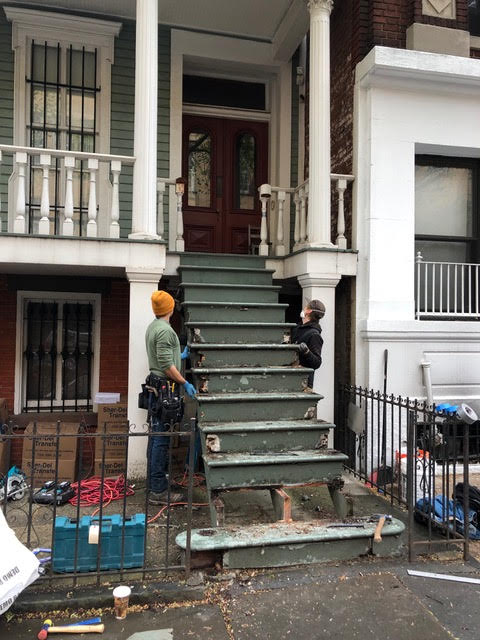
Every brownstone owner faces the same fork in the road. The staircase has stood for 150 years. The treads are worn, the finish is dark and tired, a baluster or two wobbles. So the question lands hard: restore the original staircase, or tear it out and start fresh?
Here is the honest answer. In most Brooklyn brownstones, far more of that original staircase is worth saving than people expect. The wood used a century ago was old-growth, dense, and stable in a way that new lumber rarely matches. The joinery was built by hand. The proportions fit the house. Replacing all of that with a modern stair often costs more and gives back less. At Fifty Three Restorations, brownstone staircase restoration is daily work, and we have learned to tell quickly what stays and what truly needs rebuilding. Let's break it down.
Understanding the Problem: What Time Does to a Brownstone Staircase
A Brooklyn brownstone staircase has carried families up and down for generations. That history leaves marks. Treads hollow out along the walking line. Handrails darken where thousands of hands have gripped them. Finishes oxidize, crack, and lift. Joints loosen as the wood moves with New York humidity.
None of that means the staircase is finished. The USDA Forest Products Laboratory notes that wood swells and shrinks with the seasons across its whole life, so loose joints and small gaps are signs of age, not collapse. The structure underneath is often still strong.
Real trouble looks different. Watch for these:
- Soft, spongy treads that may signal rot from past water damage
- Cracked or broken stringers, the angled boards that carry the treads
- A staircase that pulls away from the wall or feels like it sways
- Heavy insect damage in the wood
- Layers of paint hiding the original profiles and joinery
The skill in brownstone work is sorting cosmetic age, which restoration handles beautifully, from structural failure, which needs targeted rebuilding. A worn tread is cosmetic. A cracked stringer is structural. Most Brooklyn staircases hold a mix, and a careful eye separates the two.
Common Mistakes Brooklyn Brownstone Owners Make
Brownstone owners love their homes, which is exactly why these mistakes hurt.
- Assuming worn means ruined. A dark, scuffed staircase often hides gorgeous wood under a failed finish. Stripping it reveals the original.
- Replacing original balusters with stock parts. Off-the-shelf balusters rarely match the period profile, and the mismatch stands out for decades.
- Painting over everything. Thick paint buries the very details that make a brownstone staircase special and traps moisture against the wood.
- Hiring a general remodeler for historic work. Restoration of a 150-year-old stair is a different trade from building a new deck. The methods do not transfer.
- Skipping the question of landmark status. Many Brooklyn blocks sit in historic districts. Owners who ignore that can hit roadblocks mid-project.
The Professional Solution: How Brownstone Staircase Restoration Works
Our approach treats the original staircase as the starting point, not the obstacle. Through our Wood Staircases and Handrails service, the work moves in stages.
We assess first. We map the staircase part by part and separate cosmetic wear from structural issues. This single step saves brownstone owners the most money, because it stops needless replacement.
We keep what is sound. Worn treads, loosened joints, and tired finishes almost always stay. We re-glue and re-seat joints, repair surface damage, and bring the original wood back.
We rebuild only what must be rebuilt. A cracked stringer, a rotted bottom tread, a missing newel, these we repair or recreate. Matching a century-old profile is its own skill, and our Period Reconstructions service exists for exactly this.
We respect the rules. The National Park Service Standards for the Treatment of Historic Properties give the guiding idea: repair rather than replace, and when a part must be new, match the old in design, color, and texture. We build to that standard.
We finish for the future. A fresh, well-chosen finish through our Architectural Woodwork Finishes service protects the wood and lets the grain show again.
You can see this philosophy across our work, including the greenhouse restoration project and the Asbury United Methodist Church project, where saving original material guided every decision.
Why Local New York Experience Matters
Brooklyn brownstones share patterns, yet each block and builder did things a little differently. Reading those patterns comes from years inside these houses. We know the common stair layouts of the borough, the species of wood favored in different eras, and how New York humidity has treated them.
Local knowledge also covers the law. The NYC Landmarks Preservation Commission reviews most exterior changes in historic districts, and the New York Landmarks Conservancy advises that work on protected features needs the right approvals. Interior staircase restoration often sits outside that review, but a brownstone owner benefits from a team that knows where the line falls. Since 1990 we have worked across New York, from Long Island City to the brownstone blocks of Brooklyn, and that footing keeps projects smooth.
Cost and Value: What Goes Into Brownstone Staircase Restoration
A fair number comes only after we see the staircase. These factors shape the scope:
- How much is structural. Cosmetic restoration costs less than rebuilding stringers or treads.
- The amount of custom matching. Recreating period balusters or a carved newel adds skilled hours.
- Paint removal. Heavy old paint, sometimes many layers, takes time to strip safely.
- Stair size and shape. Long or curved Brooklyn staircases carry more parts and more labor.
- Finish selection. Durable finishes for a busy household cost more but last longer.
Now the value. Restoring an original brownstone staircase keeps old-growth wood and handmade joinery that cannot be bought today. It protects the home's resale appeal, since buyers across Brooklyn prize original detail. And it usually costs less than a full replacement while giving a better result. The math, in most brownstones, favors restoration.
5 Practical Tips You Can Use Today
Before you decide the fate of your brownstone staircase, try these.
- Test a hidden spot. Gently strip a small, out-of-sight patch of finish. The wood underneath often surprises owners.
- Press the treads. Firm is good. Spongy or soft may mean hidden rot worth checking.
- Look under the stairs. If you can reach the underside, check the stringers and any blocking for cracks.
- Check your district status. A quick search tells you whether your block sits in a New York historic district.
- Photograph the details. Good photos of balusters and the newel help a restorer plan accurate matches.
Frequently Asked Questions
Is my 150-year-old Brooklyn staircase too far gone to restore? Almost certainly not. Most brownstone staircases need restoration, not replacement. The original wood is usually sound under the wear.
Will restoration match the rest of my brownstone? That is the whole point. Brownstone staircase restoration keeps the original look and rebuilds only what must be new, matched to the period.
Do I need approval to work on my staircase in a historic district? Interior staircase work often falls outside Landmarks review, but protected features can trigger it. We help you confirm before work begins.
How do you match a baluster you cannot buy anymore? We build new parts to match the original profile by hand, following the same standard preservationists use across New York.
Is restoring cheaper than replacing? In most Brooklyn brownstones, yes. Restoration keeps sound material and targets only the parts that need rebuilding.
Customer Success Story
When Asbury United Methodist Church needed help with a historic stained glass project, the parish turned to Fifty Three Restorations. Anne Leclercq described the work on their 100-year-old Rose Window, a focal point of the building. Our team, led by Vince, coordinated with the glass contractor, kept communication clear with the parish, and finished on time. "It was reassuring to work with experienced professionals who care about their work," she said. That same care guides every Brooklyn brownstone staircase we touch. Saving a century-old feature, whether glass or a grand stair, rewards patience and skill over shortcuts.
Fifty Three Restorations Serving the Astoria Community and Beyond in Long Island City
Fifty Three Restorations works to meet the woodworking needs of the local community across Long Island City. With our location near Queens, we proudly handle brownstone staircase restoration for homeowners and property owners throughout New York City.
Our shop sits at 38-16 Skillman Ave # B, Long Island City, NY 11101. From there our team reaches clients in Astoria, Sunnyside, Woodside, Greenpoint, and Williamsburg, and we serve customers across Queens, Brooklyn, Manhattan, and the surrounding communities. New York homes deserve woodwork that lasts, and our New York roots run deep.
Quick Access Information
- 📍 About 10 minutes from the Ed Koch Queensboro Bridge and Gantry Plaza State Park
- 🚗 Easy access via the Brooklyn-Queens Expressway (I-278) and Queens Boulevard
- 🌆 Serving residents across Astoria, Sunnyside, and Woodside
We know that finding skilled brownstone staircase restoration close to home matters. That is why property owners across New York trust Fifty Three Restorations for reliable, careful work. From Long Island City brownstones to upstate farmhouses, our crews bring the same standards to every project. We have served the New York preservation community since 1990, and partners like the Central Park Conservancy and the New York Landmarks Conservancy have trusted our hands on landmark buildings.
Get Brownstone Staircase Restoration Services in Queens Now
Call us today at (212) 566-1053 or contact us online to request a proposal for your project.
Driving Directions from Astoria to Fifty Three Restorations
From Astoria, head south on 31st Street, then connect to Northern Boulevard heading west. Turn onto Skillman Avenue and follow it to 38-16 Skillman Ave # B in Long Island City. Most drivers reach our shop in under 15 minutes. The map below shows the route into our Long Island City location.
<iframe src="https://www.google.com/maps/embed?pb=!1m18!1m12!1m3!1d3022.670979246106!2d-73.9260912!3d40.747264799999996!2m3!1f0!2f0!3f0!3m2!1i1024!2i768!4f13.1!3m3!1m2!1s0x89c25f2822fcc717%3A0xb0f6d7a4c4f548ac!2sFifty%20Three%20Restorations%20Inc!5e0!3m2!1sen!2sph!4v1776106836033!5m2!1sen!2sph" width="600" height="450" style="border:0;" allowfullscreen="" loading="lazy" referrerpolicy="no-referrer-when-downgrade"></iframe>
Business Hours and Contact
Reaching Fifty Three Restorations in Long Island City is simple. Here are the details you need.
- Business name: Fifty Three Restorations
- Address: 38-16 Skillman Ave # B, Long Island City, NY 11101
- Phone: (212) 566-1053
- Email: info@fiftythreerestorations.com
- Website: https://fiftythreerestorations.com
Hours
- Monday to Friday: 8:00 AM to 4:30 PM
- Saturday: By appointment
- Sunday: Closed
Our Long Island City shop serves clients across New York. Call during business hours and a member of our team will talk through your project, answer questions, and set up a site visit. Prefer to write first? Send a note through our contact us online page and we will reply quickly. (Please confirm current hours by phone before visiting.)
Ready to Start Your Project
Standing at the fork between restoring and replacing your brownstone staircase? Let us take a look first. Most owners are glad they kept the original.
Fifty Three Restorations has served New York since 1990, and our Long Island City team is ready to help. Get a proposal today, and let us show you what careful brownstone staircase restoration can do for your home. Spots on our project calendar fill up through the busy New York seasons, so reaching out early gives you the best schedule.
Call (212) 566-1053 or contact us online to get a proposal. You can also visit our shop at 38-16 Skillman Ave # B, Long Island City, NY 11101. Your staircase has a story worth keeping, and we would be glad to help you protect it.
Follow Fifty Three Restorations
See more of our New York restoration work and connect with our Long Island City team online.
- Facebook: https://www.facebook.com/iconicnewyorkbuildings
- Instagram: https://www.instagram.com/53restorations/
- LinkedIn: https://www.linkedin.com/company/fifty-three-restorations-inc/
Sources
- The Secretary of the Interior's Standards for the Treatment of Historic Properties | National Park Service | Accessed 2026 | https://www.nps.gov/orgs/1739/secretary-standards-treatment-historic-properties.htm
- Permits and Making Alterations | NYC Landmarks Preservation Commission | Accessed 2026 | https://www.nyc.gov/site/lpc/about/permits-and-making-alterations.page
- Technical Tips: Preserve Your Historic Windows and Doors | New York Landmarks Conservancy | 2025 | https://nylandmarks.org/news/technical-tips-preserve-your-historic-windows-and-doors/
- USDA Forest Products Laboratory, Wood Handbook (Chapter 13: Drying and Control of Moisture Content and Dimensional Changes) | U.S. Department of Agriculture, Forest Service | 2021 | https://research.fs.usda.gov/treesearch/62261
Explore More Insights
Get Started with Your Project
Contact us today to schedule a consultation.
