

Oak, Pine, or Mahogany? Identifying the Wood in Your Historic NYC Staircase
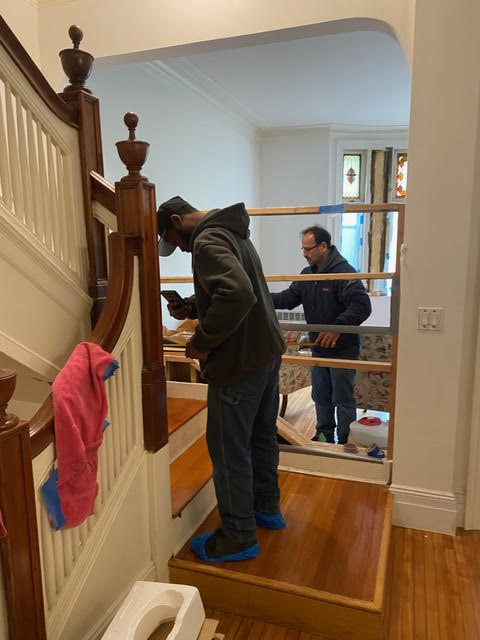
Strip the paint off a 120-year-old New York staircase and you will usually find a small museum of American lumber. Treads cut from dense old-growth oak, risers in clear white pine, a handrail in mahogany or walnut, and stringers in whatever strong, cheap timber the builder had on the scaffolding that year. Every species behaves differently under the chisel, the sander, and the finish brush, which is why identification comes before restoration.
Knowing what wood you own changes how it should be repaired, what it can be matched with, and even how it will take stain. At Fifty Three Restorations in Long Island City, species identification is step one of nearly every staircase assessment we run across New York City.
Want a professional read on your staircase wood? Book a site visit.
Why Species Matters Before Any Work Starts
Three practical reasons. First, hardness dictates technique: white pine dents if you look at it hard, while old-growth oak laughs at sandpaper and demands sharper tooling and slower passes. Second, repairs must match: a patch or replacement part in the wrong species moves, shrinks, and ages differently than the wood around it, and the repair announces itself within a season. Third, finishing chemistry varies: open-pored woods like oak and mahogany take stain and filler differently than tight-pored maple or resinous pine.
The Usual Suspects in NYC Staircases
- Oak. The workhorse of formal staircases from the 1880s through the 1930s. Look for prominent grain with visible pores and, on quartersawn cuts, the shimmering ray fleck figure. Red oak dominates; white oak appears in higher-end work. Heavy, hard, and extremely durable, which is why so many oak treads survive in Brooklyn brownstones and Manhattan pre-wars.
- Heart pine. The dense, resin-rich heartwood of old-growth southern yellow pine, common in pre-1900 construction. Color runs amber to deep reddish brown, with tight growth rings, often eight or more per inch, far denser than anything sold as pine today. Heart pine treads are treasures: harder than many hardwoods and increasingly rare.
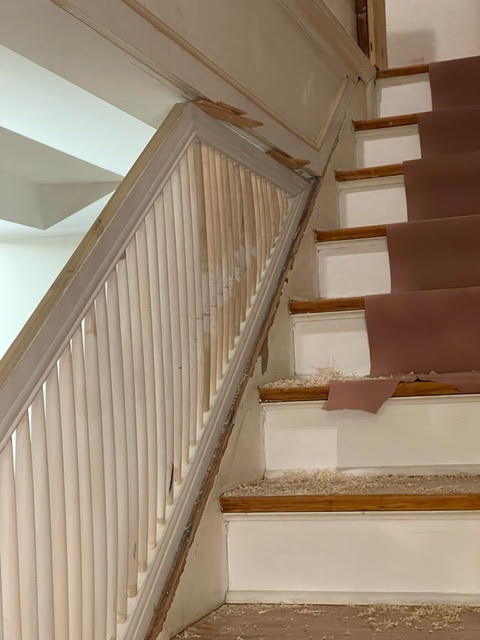
- Eastern white pine. The soft, pale, nearly knot-free pine used for risers, stringers, and painted trim. If a part was always meant to be painted, it is probably white pine. Easy to work, easy to dent, and not a candidate for clear finishing next to hardwood treads.
- Mahogany. The prestige rail and newel material of high-style Victorian and Edwardian interiors. Reddish brown, straight-grained, and stable. Genuine old-growth mahogany has a depth of color modern substitutes struggle to match.
- Walnut and chestnut. Walnut shows up in finer homes as dark, chocolate-brown rails and newels. American chestnut, functionally extinct after the early 20th-century blight, appears in pre-1920s work: warm brown, coarse-grained like oak but without the ray fleck, and now genuinely irreplaceable.
A Homeowner's Field Guide: Five Quick Tests
You can get a reasonable read on your staircase wood without touching a tool beyond a flashlight and a fingernail.
- Find bare wood. Look inside a closet-side riser, under the stair, or at a chipped nosing. Finish and age disguise color; fresh or protected wood tells the truth.
- Check the grain. Bold, open pores with visible growth rings point to oak or chestnut. Fine, even grain suggests pine or mahogany. Look for oak's ray fleck on quartersawn surfaces; chestnut lacks it.
- Try the fingernail test. Press a nail into an inconspicuous spot. White pine dents easily. Heart pine resists. Oak barely notices.
- Weigh a loose piece. If a baluster or block comes free, heft it. Oak and heart pine feel dense; white pine feels almost balsa-light.
- Smell fresh-cut wood. Resinous pine has a distinct turpentine smell when sanded. Oak smells sharper and more tannic. This one is for the curious, not the conclusive.
When the answer matters, a restoration shop can confirm species from a small sample or even a sharp photograph of end grain.
Matching 100-Year-Old Wood: The Hard Part
Even correct species identification is only half the battle, because old wood is not new wood. Old-growth lumber came from slow-grown, centuries-old trees, with growth rings packed far tighter than today's plantation stock. Tighter rings mean denser, harder, more stable wood, and a color and figure that modern lumber cannot fake on its own.
That is why matching a broken baluster or a missing tread takes more than a trip to the lumberyard. Our guide to matching new treads and balusters to a 100-year-old staircase covers the process: sourcing reclaimed or tight-grained stock, milling to the original profile, and finishing to blend with the patina of the surrounding wood. Finish choice matters just as much, and our post on choosing finishes for high-traffic staircases explains how different species and uses call for different systems. Both are part of our Wood Staircases and Handrails work.
Why It Pays to Know Before You Refinish
Species knowledge protects you from the two classic mistakes. The first is sanding aggressively without knowing the wood: a belt sander that would be slow on oak can dish soft white pine in seconds. The second is staining blind: the same stain reads nearly black on red oak, blotchy on pine, and muddy on maple. Test patches on hidden wood are not optional on a historic staircase; they are the whole game.
Species also informs value. Original heart pine treads or a mahogany rail are worth real restoration investment, and a good assessment, part of our architectural woodwork finishes planning, tells you exactly what you have before anyone picks up a sander.
Frequently Asked Questions
What kind of wood is in most NYC brownstone staircases?
Most brownstone-era stairs mix species: oak or heart pine treads, white pine risers and stringers, and mahogany, walnut, or oak rails and newels in the formal parlor stair. Service stairs were typically all pine.
Is heart pine really better than modern pine?
For stair treads, yes. Old-growth heart pine is dramatically denser and harder than modern fast-grown pine, with tighter growth rings and richer color. It is worth preserving and, when replacement is unavoidable, worth sourcing as reclaimed stock.
Can you match the wood if part of my staircase needs replacing?
In most cases, yes. Species identification comes first, then sourcing tight-grained or reclaimed stock, milling to the original profile, and finishing to blend. The match is judged by eye in your home's light, not in the shop.
Should I paint or clear-finish the wood on my historic staircase?
Historically, secondary parts like risers and stringers were often painted while treads and rails carried clear finish. If the wood under your paint is white pine, repainting is usually the right call. If it is mahogany or quartersawn oak, a clear finish may be worth the extra prep.
Does wood species affect how my staircase handles NYC humidity?
Yes. All wood moves with seasonal humidity, but species differ in how much and in which direction. Dense, quartersawn stock moves least; wide, flat-sawn pine moves most. Mixed-species stairs need joinery that tolerates different movement rates, which original builders understood well.
Project Spotlight: A Brooklyn Staircase, Matched and Restored
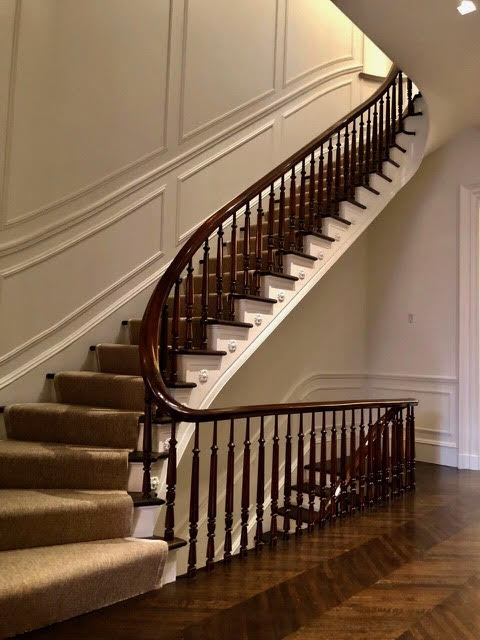
Our Dean Street staircase restoration in Brooklyn put species matching to the test: replacement components sourced and milled to sit invisibly beside wood laid down generations ago. It is the standard we hold on every staircase, whatever the species.
Fifty Three Restorations Serving the Upper West Side Community and Beyond in Long Island City
Fifty Three Restorations works to meet the woodworking needs of the local community across Long Island City. From our shop near Queens, we proudly handle staircase assessment and restoration for homeowners and property owners throughout New York City.
Our shop sits at 38-16 Skillman Ave # B, Long Island City, NY 11101. From there our team reaches clients on the Upper West Side and Upper East Side, in Harlem, Astoria, and Greenpoint, and we serve customers across Manhattan, Queens, Brooklyn, and the surrounding communities.
Quick Access Information
- 📍 Minutes from the Ed Koch Queensboro Bridge and the Queens Midtown Tunnel approach
- 🚗 Easy access via the Brooklyn-Queens Expressway (I-278) and the Long Island Expressway (I-495)
- 🌆 Serving residents across the Upper West Side, Harlem, and Astoria
Driving Directions from the Upper West Side to Fifty Three Restorations
<iframe src="https://www.google.com/maps/embed?pb=!1m18!1m12!1m3!1d3022.670979246106!2d-73.9260912!3d40.747264799999996!2m3!1f0!2f0!3f0!3m2!1i1024!2i768!4f13.1!3m3!1m2!1s0x89c25f2822fcc717%3A0xb0f6d7a4c4f548ac!2sFifty%20Three%20Restorations%20Inc!5e0!3m2!1sen!2sph!4v1776106836033!5m2!1sen!2sph" width="600" height="450" style="border:0;" allowfullscreen="" loading="lazy" referrerpolicy="no-referrer-when-downgrade"></iframe>
From the Upper West Side, take Central Park West or the West Side Highway south, cross to the Ed Koch Queensboro Bridge via East 60th Street, and continue into Long Island City to Skillman Avenue and 38-16 Skillman Ave # B. Allow 25 to 35 minutes depending on traffic.
Business Hours and Contact
- Business name: Fifty Three Restorations
- Address: 38-16 Skillman Ave # B, Long Island City, NY 11101
- Phone: (212) 566-1053
- Email: info@fiftythreerestorations.com
- Website: https://fiftythreerestorations.com
Hours
Monday to Friday: 8:00 AM to 4:30 PM
Saturday: By appointment
Sunday: Closed
Call during business hours and a member of our team will talk through your project, answer questions, and set up a site visit. Prefer to write first? Send a note through our Contact Us page and we will reply quickly. (Please confirm current hours by phone before visiting.)
Ready to Learn What Your Staircase Is Made Of
The wood in your staircase has been there since before your building had electricity. It deserves a restoration plan built on knowing exactly what it is.
Fifty Three Restorations has served New York since 1990, and our Long Island City team is ready to help. Call (212) 566-1053 or visit https://fiftythreerestorations.com/contact-us to request a proposal. Bring us your questions, and maybe a photo of the grain. We love this part.
Follow Fifty Three Restorations
- Facebook: https://www.facebook.com/iconicnewyorkbuildings
- Instagram: https://www.instagram.com/53restorations/
- LinkedIn: https://www.linkedin.com/company/fifty-three-restorations-inc/
Sources
- USDA Forest Products Laboratory, Wood Handbook (Chapter 2: Characteristics and Availability of Commercially Important Woods) | U.S. Department of Agriculture, Forest Service | 2021 | https://research.fs.usda.gov/treesearch/62261
- The Wood Database | https://www.wood-database.com/
Related Resources
Explore More Insights

Get Started with Your Project
Contact us today to schedule a consultation.
