

How to Match New Treads and Balusters to a 100-Year-Old Staircase
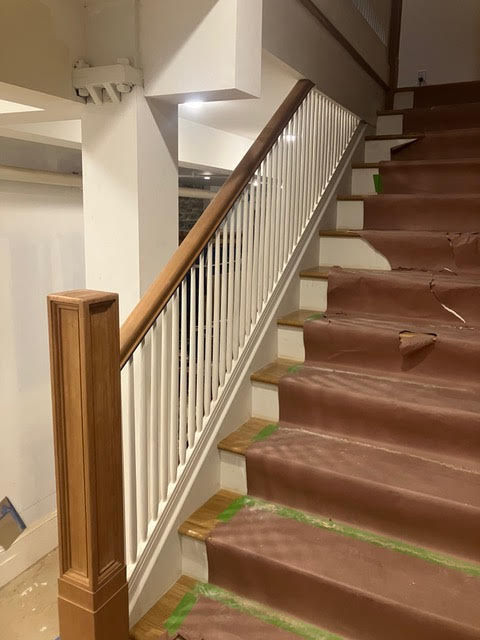
Picture a beautiful old staircase, a hundred years of New York history in every turned baluster, and then one part that ruins it. A single replacement baluster from a hardware store, slightly the wrong shape, a little too pale, sitting among its hand-turned neighbors. Your eye goes straight to it every time. A mismatch like that can undo the look of an entire staircase.
That is the central challenge of partial stair repairs in older homes: a new tread or baluster has to disappear into the original, not stand out from it. Matching means more than rough size. It means the right profile, the right wood, the right color, and the right surface, all built to vanish into a staircase that was made by hand long before any of us were born. At Fifty Three Restorations, matching staircase balusters and treads to century-old originals is a core skill, and it is the difference between a repair you notice and one you never see. Let's break it down.
Understanding the Problem: Why Matching Is So Hard
A 100-year-old staircase was not built from a catalog. Its parts were turned, cut, and shaped by hand or on equipment long retired. The wood was often old-growth, denser and different in grain from what you can buy today. A century of light, air, and use has colored and aged every surface. So a brand-new part faces four gaps it must close at once:
- Profile. The exact shape of a baluster or the nosing of a tread is specific to its maker and era. Stock parts rarely match.
- Wood species and grain. Old staircases used species and grades that modern lumber yards may not stock.
- Color and patina. A hundred years of aging gives original wood a depth that fresh wood lacks.
- Surface and wear. Original parts carry soft, worn edges that a sharp new part does not.
The National Park Service Standards for the Treatment of Historic Properties name the target plainly: when a part must be new, match the old in design, color, and texture. The USDA Forest Products Laboratory adds a practical warning, since wood moves with humidity, a new part must also be properly dried and acclimated, or it will shift out of alignment with the original after installation. Matching, done right, is part artistry and part building science.
Common Mistakes Homeowners Make When Replacing Parts
These five errors create the mismatches that ruin otherwise lovely staircases.
- Buying stock balusters. Off-the-shelf parts almost never match a century-old profile. The difference shows for decades.
- Ignoring the wood species. A new part in the wrong species takes stain differently and never quite blends.
- Matching color before the rest. Color is the last step, not the first. A perfect stain on the wrong profile still looks wrong.
- Skipping acclimation. Installing a new part before it adjusts to indoor humidity invites shifting and gaps later.
- Treating new parts like old. A sharp, machine-fresh edge among soft, worn originals draws the eye. New parts need careful blending.
The Professional Solution: How We Match New Parts to Old
Real matching recreates the part, then makes it belong. Through our Wood Staircases and Handrails and Period Reconstructions services, here is how we do it.
We capture the original profile. We measure and template an existing baluster or tread so the new part copies the exact shape, curve, and nosing of its neighbors.
We choose the right wood. We select a species and grain that match the original, drawing on relationships with specialty lumber suppliers so the new part starts from the right material.
We build to match by hand. We turn or shape the new baluster, or cut the new tread, to the templated profile. This is the heart of the work, recreating what no store sells.
We acclimate before installing. We let the new part adjust toward the home's indoor humidity so it moves in step with the original wood, not against it, exactly as the science calls for.
We blend color and surface last. Through our Architectural Woodwork Finishes service, we color and finish the new part to match the aged tone of the originals, and we ease its edges so it carries the same worn softness. Done right, you cannot find the new part.
You can see this matching discipline across our work, including the greenhouse restoration project, where new and original elements had to read as one.
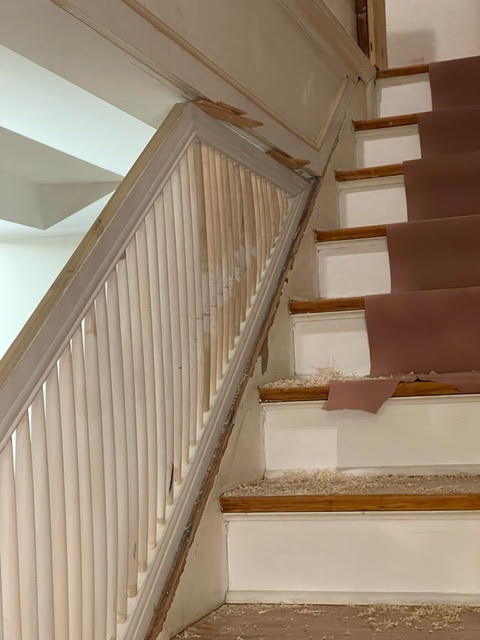
Before and After, in Principle
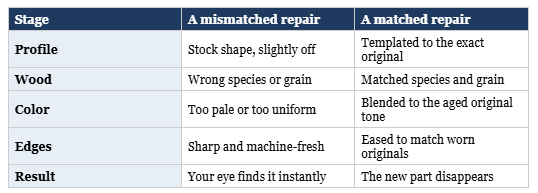
The promise is simple. A matched tread or baluster lets the staircase read as one continuous, century-old whole again.
Why Local New York Experience Matters
Older New York staircases were built by particular shops, in particular eras, with particular woods. Recognizing those profiles and species comes from years inside these homes. We know the baluster shapes common to New York brownstones and the species favored in early colonials, and we keep the supplier relationships needed to source matching material. We also understand how New York's seasonal humidity will move a new part, so we acclimate accordingly. Since 1990 we have matched parts into New York staircases, from Long Island City to upstate homes, which is why our repairs blend instead of broadcast.
Cost and Value: What Goes Into Matching Treads and Balusters
A fair figure follows a look at the staircase and the parts involved. Scope depends on:
- Profile complexity. A simple baluster matches faster than an ornate, multi-turn original or a carved newel.
- Number of parts. One replacement is quick. A run with several missing balusters takes more time.
- Wood sourcing. Matching an uncommon species can require specialty material.
- Color and finish blending. Aging a new part to match a century-old tone is skilled, patient work.
The value is in the result. A matched repair keeps the staircase looking whole and original, which protects both its beauty and the appeal of your New York home to buyers who notice these details. A mismatch, by contrast, cheapens an otherwise historic stair. Spending a little more to match correctly protects the value of everything around it.
5 Practical Tips You Can Use Today
If your staircase is missing or damaging a part, do this.
- Save the original. Keep any broken or removed baluster. It is the best template for an accurate match.
- Photograph from several angles. Good photos of the profile and the newel help plan an exact recreation.
- Do not buy stock to "tide you over." A temporary mismatched part often becomes permanent. Wait for the right match.
- Note the wood, if you can. Any clue about the original species helps a restorer source matching material.
- Resist quick color fixes. Staining a wrong-profile part will not save it. Match shape and species first.
Frequently Asked Questions
Can you really match a baluster I cannot buy anymore? Yes. We template an existing original and recreate the new part by hand to match its exact profile, then blend the color and surface.
Why does a new part look so obvious next to old ones? New parts differ in profile, wood, color, and edge wear all at once. Closing all four gaps is what makes a matched repair disappear.
Will a new tread move differently than the old ones? It can, if it is not acclimated first. We let new parts adjust toward the home's humidity so they move in step with the original wood.
Do I need to match if only one baluster is missing? Yes. A single mismatched part draws the eye and undercuts the whole staircase. Matching keeps it reading as one piece.
Is it cheaper to just replace the whole railing? Usually not, and you would lose the original parts. Matching new pieces to the originals keeps far more value than wholesale replacement.
Customer Success Story
James C trusted us with original double-hung windows from around 1790 and a Dutch door of the same era. Rather than swap in modern replacements, our team restored the originals and rebuilt the door to work like new, with new weatherstripping where needed. "They are expert craftspeople," he said. That project lives on the same skill as matching a baluster: respect the original, recreate or restore to match it exactly, and let the repair vanish into the whole. A staircase deserves the same. The right match keeps a century of New York history reading as one.
Fifty Three Restorations Serving the Astoria Community and Beyond in Long Island City
Fifty Three Restorations works to meet the woodworking needs of the local community across Long Island City. With our location near Queens, we proudly handle matching treads and balusters for homeowners and property owners throughout New York City.
Our shop sits at 38-16 Skillman Ave # B, Long Island City, NY 11101. From there our team reaches clients in Astoria, Sunnyside, Woodside, Greenpoint, and Williamsburg, and we serve customers across Queens, Brooklyn, Manhattan, and the surrounding communities. New York homes deserve woodwork that lasts, and our New York roots run deep.
Quick Access Information
- 📍 About 10 minutes from the Ed Koch Queensboro Bridge and Gantry Plaza State Park
- 🚗 Easy access via the Brooklyn-Queens Expressway (I-278) and Queens Boulevard
- 🌆 Serving residents across Astoria, Sunnyside, and Woodside
We know that finding skilled matching treads and balusters close to home matters. That is why property owners across New York trust Fifty Three Restorations for reliable, careful work. From Long Island City brownstones to upstate farmhouses, our crews bring the same standards to every project. We have served the New York preservation community since 1990, and partners like the Central Park Conservancy and the New York Landmarks Conservancy have trusted our hands on landmark buildings.
Get Matching Staircase Balusters Services in Queens Now
Call us today at (212) 566-1053 or contact us online to request a proposal for your project.
Driving Directions from Astoria to Fifty Three Restorations
From Astoria, head south on 31st Street, then connect to Northern Boulevard heading west. Turn onto Skillman Avenue and follow it to 38-16 Skillman Ave # B in Long Island City. Most drivers reach our shop in under 15 minutes. The map below shows the route into our Long Island City location.
<iframe src="https://www.google.com/maps/embed?pb=!1m18!1m12!1m3!1d3022.670979246106!2d-73.9260912!3d40.747264799999996!2m3!1f0!2f0!3f0!3m2!1i1024!2i768!4f13.1!3m3!1m2!1s0x89c25f2822fcc717%3A0xb0f6d7a4c4f548ac!2sFifty%20Three%20Restorations%20Inc!5e0!3m2!1sen!2sph!4v1776106836033!5m2!1sen!2sph" width="600" height="450" style="border:0;" allowfullscreen="" loading="lazy" referrerpolicy="no-referrer-when-downgrade"></iframe>
Business Hours and Contact
Reaching Fifty Three Restorations in Long Island City is simple. Here are the details you need.
- Business name: Fifty Three Restorations
- Address: 38-16 Skillman Ave # B, Long Island City, NY 11101
- Phone: (212) 566-1053
- Email: info@fiftythreerestorations.com
- Website: https://fiftythreerestorations.com
Hours
- Monday to Friday: 8:00 AM to 4:30 PM
- Saturday: By appointment
- Sunday: Closed
Our Long Island City shop serves clients across New York. Call during business hours and a member of our team will talk through your project, answer questions, and set up a site visit. Prefer to write first? Send a note through our contact us online page and we will reply quickly. (Please confirm current hours by phone before visiting.)
Ready to Start Your Project
Got one part that ruins an otherwise beautiful staircase? We can recreate it to match the originals so it disappears. Let us take a look.
Fifty Three Restorations has served New York since 1990, and our Long Island City team is ready to help. Get a proposal today, and let us show you what careful matching staircase balusters can do for your home. Spots on our project calendar fill up through the busy New York seasons, so reaching out early gives you the best schedule.
Call (212) 566-1053 or contact us online to get a proposal. You can also visit our shop at 38-16 Skillman Ave # B, Long Island City, NY 11101. Your staircase has a story worth keeping, and we would be glad to help you protect it.
Follow Fifty Three Restorations
See more of our New York restoration work and connect with our Long Island City team online.
- Facebook: https://www.facebook.com/iconicnewyorkbuildings
- Instagram: https://www.instagram.com/53restorations/
- LinkedIn: https://www.linkedin.com/company/fifty-three-restorations-inc/
Sources
- The Secretary of the Interior's Standards for the Treatment of Historic Properties | National Park Service | Accessed 2026 | https://www.nps.gov/orgs/1739/secretary-standards-treatment-historic-properties.htm
- USDA Forest Products Laboratory, Wood Handbook (Chapter 13: Drying and Control of Moisture Content and Dimensional Changes) | U.S. Department of Agriculture, Forest Service | 2021 | https://research.fs.usda.gov/treesearch/62261
Related Resources
Explore More Insights

Get Started with Your Project
Contact us today to schedule a consultation.
