

Stair Railing & Banister Repair in NYC Homes

A wobbly banister is the most common staircase problem in older New York City homes, and the good news is that it is almost always repairable. In most NYC brownstones, townhouses, and prewar apartment buildings, stair railing and banister repair means tightening or reinforcing the newel post, re-gluing or replacing loose balusters, and rebuilding the handrail joints that have worked loose over decades of daily use. Done properly, repair keeps the original old-growth wood in place and costs far less than ripping out a railing that has been part of the house for a century.
Quick answer: most stair railing problems in NYC homes are repairable. A wobbly banister usually needs newel post reinforcement, fresh joinery work, or selective baluster replacement, not a full railing replacement.
Schedule a complimentary staircase assessment today.
Common Stair Railing and Banister Problems in NYC Homes
The five railing problems below account for most repair calls we take across Brooklyn, Manhattan, and Queens. Every one of them is fixable, and most are fixable without replacing the railing.
- Wobbly newel posts: the anchor point of the whole railing. Movement here makes the entire run feel loose, and it usually comes from failed fasteners or a joint that has dried and shrunk.
- Loose or missing balusters: balusters work out of their mortises over time, especially on stairs kids use as a climbing gym. Missing balusters are also a safety and code concern.
- Failing handrail joints: the joints where rail sections meet, or where the rail meets the newel, open up as the building settles and humidity cycles season to season.
- Cracked or split rails: age, over-tightened hardware, and past amateur repairs leave rails cracked along the grain. Most cracks can be glued, splined, or Dutchman repaired.
- Paint buildup hiding damage: a century of paint can conceal loose joints, soft wood, and previous repairs that are now failing underneath.
How Professionals Repair a Wobbly Banister
Professional banister repair starts at the newel post, because that is where most railing movement originates. The repair sequence is methodical: assess the full run, stabilize the anchor points, then work outward through the joints and balusters.
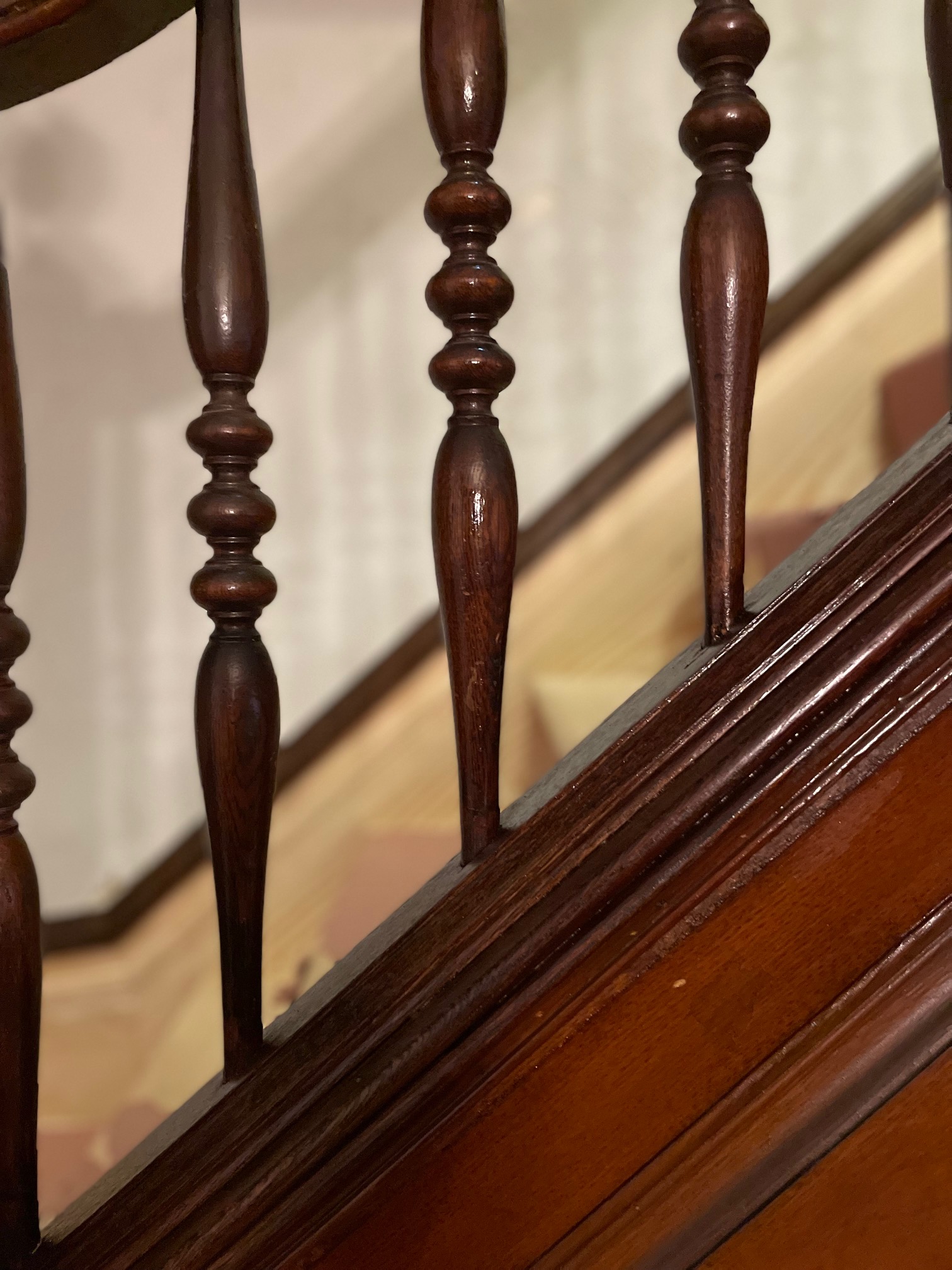
First, the carpenter identifies every point of movement in the railing, not just the obvious wobble. Newel posts are re-anchored from below or inside wherever possible, so finished surfaces stay intact. Open joints are cleaned of failed glue and debris, then re-glued and drawn tight with hidden fasteners. Loose balusters are re-seated in their mortises, and broken or missing ones are reproduced on the lathe to match the original turning profile, wood species, and finish. The result is a railing that feels solid because it actually is solid, from the anchor points up.

Railing Repair vs. Replacement: How to Decide
Repair is the right call when the railing is fundamentally sound: solid wood, localized damage, and components worth keeping. Replacement enters the conversation only when damage is widespread or the railing was poorly built to begin with.
- Choose repair when: the newel and rail are sound, damage is limited to joints, balusters, or finish, and the railing has historic or aesthetic value worth preserving.
- Consider partial replacement when: one section is beyond saving, for example a water-damaged starter step and newel, while the rest of the run can be restored and matched.
- Full replacement is rarely necessary: original NYC stair railings were built from old-growth wood that is denser and more stable than anything sold today. Keeping it is usually the higher-quality outcome.
One more factor: if you are renovating the stair itself, the work can trigger current building code requirements for railing height and baluster spacing. A like-for-like repair usually does not. We flag code questions during the assessment so there are no surprises.
What Stair Railing Repair Costs in NYC
Cost depends on scope, and every historic railing is different, so honest pricing starts with a site visit rather than a phone quote. The factors that move the number are consistent, though.
- Extent of damage: re-anchoring one newel post is a small job; rebuilding joints along a three-flight railing is a larger one.
- Matching turnings: reproducing missing balusters or carved newel details on the lathe adds shop time, and it is the part that makes the repair invisible.
- Finish work: stripping a century of paint versus touching up an existing finish changes the labor significantly.
- Access: work in an occupied brownstone or a co-op with protection requirements takes more setup than an empty house.
After an on-site assessment, we provide a written estimate that breaks out repair, fabrication, and finishing line by line, so you can see exactly what you are paying for.
NYC Building Code Basics for Stair Railings
Stair railings in New York City homes must meet a few core safety standards, and repairs are a good time to check them. Handrails are generally required at 34 to 38 inches above the stair nosing, and baluster spacing must be tight enough that a 4-inch sphere cannot pass through. These rules exist to protect children and prevent falls.
For most homeowners, the practical takeaway is simple: if your railing has missing balusters, wide gaps, or a rail that sits too low, repairing it correctly also brings it closer to code. Buildings with landmark status add another layer, since visible alterations may need Landmarks Preservation Commission review. We work within both frameworks regularly and can tell you which rules apply to your address.
5 Ways to Make Your Railing Last Longer
- Tighten early: a newel post that moves a quarter inch today will move an inch next year. Early repair is always the cheaper repair.
- Skip the overtightened screw fix: driving drywall screws into a rail joint splits old wood and makes the eventual proper repair harder.
- Control humidity: wood movement drives most joint failure. Keeping indoor humidity steadier through winter reduces how hard the railing works.
- Clean gently: harsh cleaners soften old shellac and varnish. A damp cloth and mild soap protect the finish that protects the wood.
- Inspect yearly: run your hand along the rail and check for new movement, hairline cracks at joints, and balusters that spin in place.
Frequently Asked Questions
Why is my banister wobbly?
A wobbly banister almost always traces back to the newel post, the main anchor of the railing. Decades of use loosen the fasteners or shrink the wood joints that hold it, and the movement travels up the entire run. Reinforcing the newel post fixes most wobbles at the source.
Can you match balusters that are no longer sold?
Yes. We reproduce balusters, newel posts, and handrail profiles on the lathe in our Long Island City workshop, working from an existing piece, a fragment, or photographs. Matching the wood species, turning profile, and finish is standard practice on historic NYC staircases.
How long does stair railing repair take?
A focused repair, such as re-anchoring a newel post and re-seating several balusters, typically takes one to two days on site. Projects that include lathe work or refinishing take longer because components are made in our workshop before installation.
Do I need a permit to repair a stair railing in NYC?
Like-for-like repairs generally do not require a permit in New York City. Work that alters the stair structure or changes the railing configuration can trigger code review, and landmark buildings may need Landmarks Preservation Commission approval for visible changes. We confirm what applies to your project during the assessment.
Should a painted banister be stripped or repainted?
It depends on the wood underneath and the look of your home. Many NYC brownstone railings were originally finished in clear varnish over mahogany or oak, and stripping reveals wood worth showing. Where the railing was always painted, a properly prepped repaint is the historically consistent choice.
Is my stair railing up to code?
Check two things: handrail height between 34 and 38 inches above the stair nosing, and baluster gaps small enough that a 4-inch sphere cannot pass through. If your railing fails either check, or if balusters are missing, a repair visit can bring it back into line.
Project Spotlight: Dean Street Brownstone Staircase
A recent brownstone staircase restoration on Dean Street in Brooklyn included exactly this kind of railing work: reproducing missing turned balusters, tightening the handrail joints, and refinishing the newel and rail to match the original mahogany. The full walkthrough is on the project page, and our Brooklyn wood stair restoration page covers more local examples. For the full scope of what we do on stairs, see our wood staircase restoration and repair services.
Fifty Three Restorations Serving the Park Slope Community and Beyond in Long Island City
Our workshop in Long Island City serves homeowners across Park Slope, Brooklyn Heights, Manhattan, and the rest of New York City. Whether your railing needs a single newel post re-anchored or a full run of balusters reproduced, our team handles the work from assessment to final finish.
- 📍 Address: 38-16 Skillman Ave # B, Long Island City, NY 11101
- 📞 Phone: (212) 566-1053
- ✉️ Email: info@fiftythreerestorations.com
Driving Directions from Park Slope to Fifty Three Restorations
From Park Slope, take Fourth Avenue north toward the Brooklyn-Queens Expressway, then follow the BQE to the Long Island Expressway heading east. Exit toward Greenpoint Avenue, continue to Skillman Avenue, and follow it to 38-16 Skillman Ave # B in Long Island City. The drive is usually under 30 minutes outside rush hour. The map below shows the route to our Long Island City workshop.
<iframe src="https://www.google.com/maps/embed?pb=!1m18!1m12!1m3!1d3022.670979246106!2d-73.9260912!3d40.747264799999996!2m3!1f0!2f0!3f0!3m2!1i1024!2i768!4f13.1!3m3!1m2!1s0x89c25f2822fcc717%3A0xb0f6d7a4c4f548ac!2sFifty%20Three%20Restorations%20Inc!5e0!3m2!1sen!2sph!4v1776106836033!5m2!1sen!2sph" width="600" height="450" style="border:0;" allowfullscreen="" loading="lazy" referrerpolicy="no-referrer-when-downgrade"></iframe>
Business Hours and Contact
Reaching Fifty Three Restorations in Long Island City is simple. Here are the details you need.
- Business name: Fifty Three Restorations
- Address: 38-16 Skillman Ave # B, Long Island City, NY 11101
- Phone: (212) 566-1053
- Email: info@fiftythreerestorations.com
- Website: https://fiftythreerestorations.com
Hours
- Monday to Friday: 8:00 AM to 4:30 PM
- Saturday: By appointment
- Sunday: Closed
Please call to confirm current hours before visiting. Our team talks through your project, answers questions, and sets up a site visit during business hours.
Ready to Repair Your Railing?
A loose banister does not fix itself, and early repair is always the simpler, cheaper job. Call (212) 566-1053, visit https://fiftythreerestorations.com, or contact our Long Island City team to schedule a complimentary assessment.
Follow Fifty Three Restorations
See more of our New York restoration work and connect with our Long Island City team online.
- Facebook: https://www.facebook.com/iconicnewyorkbuildings
- Instagram: https://www.instagram.com/53restorations/
- LinkedIn: https://www.linkedin.com/company/fifty-three-restorations-inc/
Sources
- 2022 NYC Construction Codes | New York City Department of Buildings | 2022 | https://www.nyc.gov/site/buildings/codes/2022-construction-codes.page
- Wood Handbook, Chapter 13: Drying and Control of Moisture Content | USDA Forest Products Laboratory | 2021 | https://research.fs.usda.gov/treesearch/62261
- Preservation Briefs | National Park Service, Technical Preservation Services | https://www.nps.gov/orgs/1739/preservation-briefs.htm
Related Resources

Get Started with Your Project
Contact us today to schedule a consultation.
