

Inside Belvedere Castle: What a Landmark Restoration in New York City Actually Looks Like
Introduction
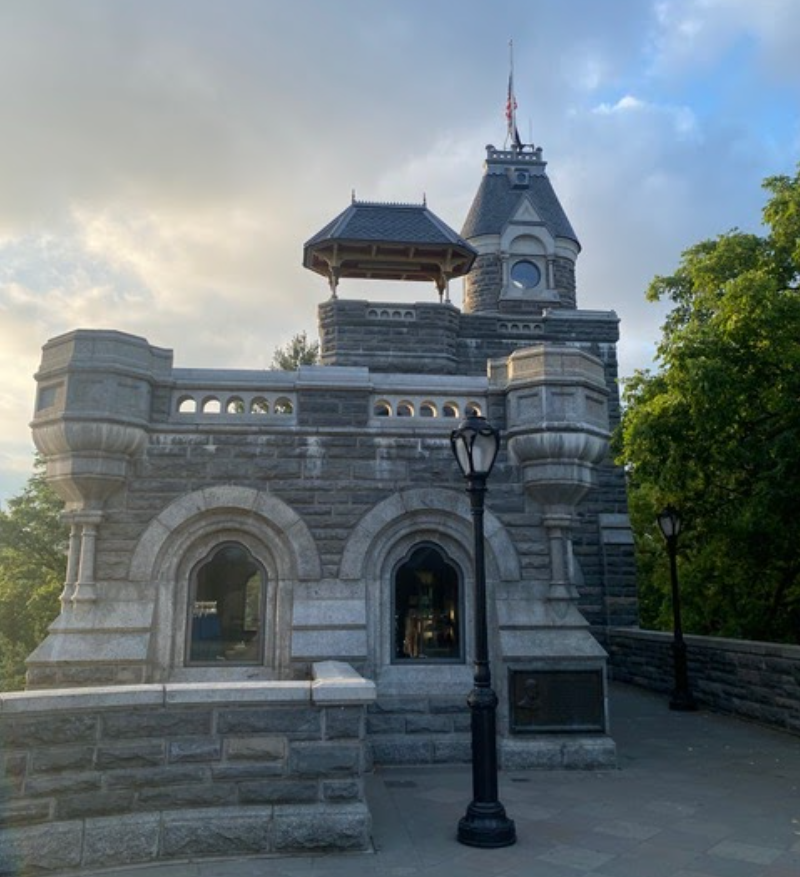
Most people who cross Central Park and look up at Belvedere Castle see a picturesque Victorian structure rising from a rocky outcrop above Turtle Pond. What they do not see is the sustained, specialized work required to keep a 19th-century landmark in service for the 21st century. Fifty Three Restorations, based in Long Island City, NY, has worked on New York City landmarks including Belvedere Castle. This post walks through what a major restoration project actually involves from first assessment to final walk-through, so that building owners, institutions, and property managers across New York City understand what to expect when they engage a historic preservation contractor.
What Is a Landmark Restoration Project?
A landmark restoration project is not a renovation or a remodel. The goal is to return a structure to a known earlier condition by removing evidence of deterioration while preserving elements that have acquired significance over time. In New York City, this work occurs within the framework of the Landmarks Preservation Commission, which sets standards for materials, methods, and the reversibility of interventions.
Every landmark restoration project involves three overlapping streams of work:
- Documentation of existing conditions (photography, measured drawings, written assessment)
- Investigation of deterioration causes (moisture infiltration, structural movement, material failure)
- Field execution of repair and replacement work consistent with original materials and methods
The documentation phase is not overhead. It is the foundation of every subsequent decision and the record that protects the owner in any future LPC review.
5 Common Misunderstandings About Landmark Restoration
- It is just fancy renovation. Landmark restoration follows the Secretary of the Interior's Standards for the Treatment of Historic Properties, a federal framework that governs what interventions are appropriate. The Standards are more specific and more demanding than typical renovation guidelines.
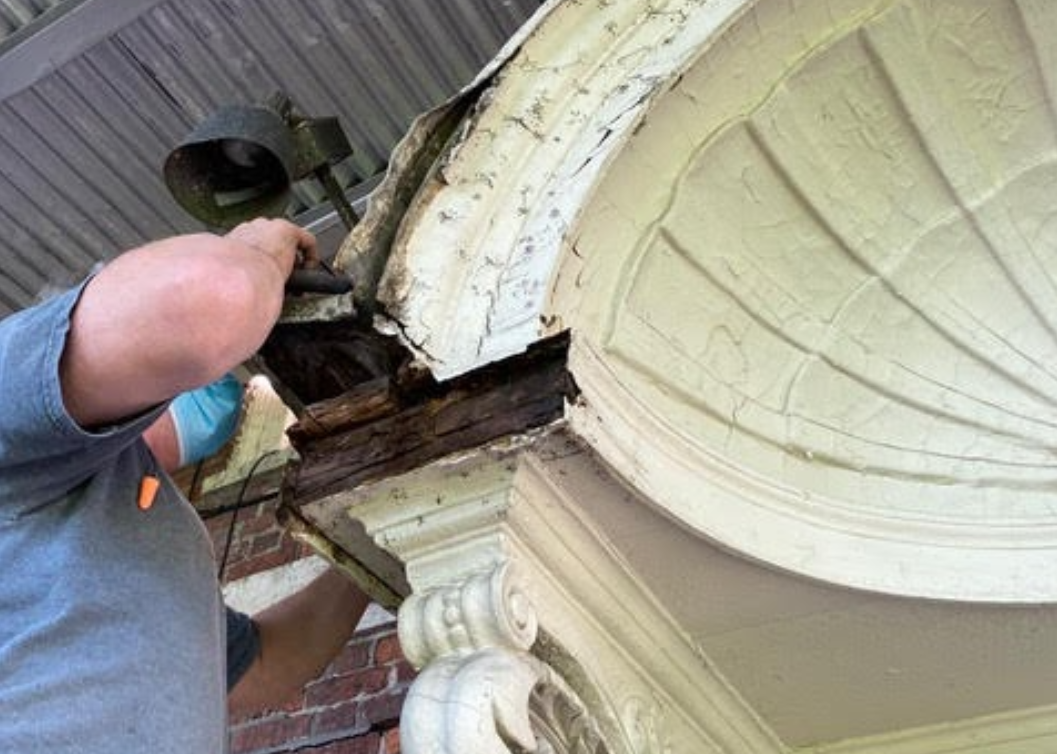
- Any licensed contractor can do it. A contractor license qualifies someone to build. It does not qualify them to work on landmark materials. The skills required, including epoxy consolidation, wood species matching, traditional joinery, and period finish systems, are specialized.
- The LPC makes it impossible to get things done. Most LPC reviews proceed smoothly when applications are well-prepared. The friction typically comes from incomplete documentation or proposals that do not align with established guidelines.
- Restoration always takes longer than new construction. Complex restoration projects can be faster than new construction when material sourcing is managed well and the team is experienced. Predictable projects are well-planned projects.
- It costs more than it is worth. For institutional owners such as New York City Parks or museum conservators, restoration is the only viable path for irreplaceable structures. For private owners, the cost-benefit calculation consistently favors restoration when full lifecycle and compliance costs are included.
Inside the Belvedere Castle Restoration
The Belvedere Castle project involved historic architectural woodwork on a structure managed by NYC Parks within the most visited urban park in the United States. Here is how the project moved from start to finish.
Assessment and Documentation. Principal Vince Lepre led an initial site walk to document existing conditions. Photographs, written notes, and measured observations captured the state of each element before any work began. This documentation served both as the basis for our scope of work and as the baseline record for NYC Parks.
Scope Development and LPC Coordination. Working within the LPC approval framework required a detailed description of proposed materials and methods. For wood elements, we specified matching species, profiles, and finish systems. Our familiarity with LPC technical guidelines allowed us to prepare documentation that staff could review efficiently.
Material Sourcing. Historic structures in Central Park were built with materials that are no longer available through standard commercial channels. We sourced matching species through our specialty supplier network, which includes partners for old-growth reclaimed lumber and sustainable domestic alternatives such as black locust.
Field Execution. Our craftspeople executed repairs using traditional joinery techniques where the original construction called for them. We did not substitute modern fasteners for original wooden pegs or drawbored tenons where those methods were part of the building's historic fabric.
Documentation and Close-out. We provided NYC Parks with a complete photographic record of the completed work, along with notes on any conditions observed during execution that may inform future maintenance cycles.
Why New York City Institutional Projects Require Specialized Teams
NYC Parks projects operate within a web of institutional requirements that include LPC approvals, city procurement standards, environmental review, and public access management. A restoration contractor working in Central Park cannot simply close off an area and work without coordinating access, safety, and schedule with the Parks Department.
Fifty Three Restorations has developed working relationships with the agencies and institutions that manage New York City's public landmarks. We understand how to prepare documentation that meets institutional standards and how to sequence work around public programming and access requirements.
Cost and Value in Institutional Landmark Restoration
Institutional projects are typically bid competitively. The lowest bid does not always represent the lowest total cost. A contractor who under-bids because they do not understand LPC requirements, material sourcing complexity, or institutional coordination demands will generate change orders, delays, and compliance problems that cost the institution more than a well-priced original bid.
Fifty Three Restorations scopes institutional projects thoroughly before bidding. We ask the questions that prevent surprises: What is the LPC approval status? What are the material standards? What are the access constraints? What does the institution's documentation require?
5 Practical Tips for Institutions Planning a Landmark Restoration
- Start the documentation process before you issue an RFP. A thorough conditions report gives contractors the information they need to bid accurately and gives your institution a baseline for scope management.
- Include LPC filing support in your contractor requirements. Not every preservation contractor understands LPC procedures. This is a qualification to verify, not assume.
- Budget for material sourcing time. Specialty wood species and period-appropriate hardware can have lead times of four to twelve weeks. Build this into your schedule.
- Require photographic documentation as a contract deliverable. This protects the institution in future reviews and supports maintenance planning.
- Evaluate contractor portfolios for completed public or institutional landmark projects. A residential brownstone project and a NYC Parks commission require different skills.
Frequently Asked Questions
Does Fifty Three Restorations work with NYC Parks and cultural institutions?
Yes. We have completed work for public institutions and cultural organizations managing historic structures in New York City, including work at Belvedere Castle in Central Park.
How long does a landmark restoration project take?
Timeline depends on scope, LPC approval schedule, and material sourcing. Simple wood restoration projects can complete in weeks. Complex multi-component projects may run six months to a year or more.
Do you provide written condition assessments for institutions?
Yes. We provide detailed written and photographic condition assessments that support LPC filings, institutional reporting, and future maintenance planning.
Can you work within competitive bid processes?
Yes. We are experienced with institutional procurement requirements and can submit proposals consistent with public procurement standards.
What makes your team qualified for public landmark work?
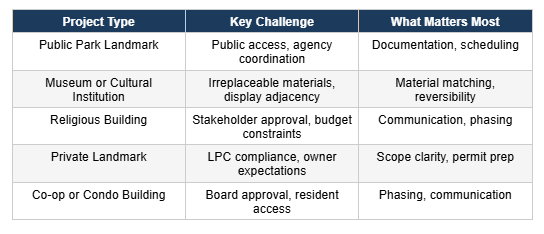
Principal Vince Lepre holds an MS in Historic Preservation from Columbia University and has worked on New York City landmark properties since 1984. Our craftspeople are trained in traditional joinery and period finish systems. We have completed projects at museums, religious buildings, parks, and private landmarks across the five boroughs.
Customer Success: Church Restoration in New York City
Anne Leclercq described the work Fifty Three Restorations completed for her church's stained glass window restoration project:
"Fifty-Three Restorations completed work for our church stained glass window restoration project. Vince and team provided expert work on our 100 year-old Rose Window, a historic and architectural focal point in our church. They coordinated with our glass contractor to ensure timely completion, and provided teamwork and good communication to our parish coordinator. It was reassuring to work with experienced professionals who care about their work and the parish that they work with."
This project required coordination between our woodwork team and the glass subcontractor, precise documentation for the institution, and sensitivity to the meaning the window holds for the congregation.
Fifty Three Restorations Serving Long Island City and Beyond
Fifty Three Restorations is dedicated to serving the diverse needs of the local community of Long Island City, Queens. With our convenient location near the Queens-Midtown Tunnel and the Long Island Expressway (I-495), we offer architectural woodwork restoration, period reconstructions, building cornices, and architectural woodwork finishes to property owners throughout the New York City area.
Located at 38-16 Skillman Ave # B, Long Island City, NY 11101, our team is accessible from Manhattan, Brooklyn, the Bronx, Staten Island, and all parts of Queens. We serve customers across New York City, Long Island, and Westchester County.
Quick Access Information
- Minutes from Manhattan via the Queens-Midtown Tunnel
- Easy access via the Long Island Expressway (I-495) and the BQE (I-278)
- Serving residents across the Upper West Side, Brooklyn Heights, Park Slope, Harlem, and the Bronx
- Projects completed throughout New York State
Finding quality landmark and institutional restoration close to home matters. Clients throughout New York City and the greater metro area trust Fifty Three Restorations for reliable, professional craftsmanship backed by more than three decades of experience in historic preservation.
Get landmark and institutional restoration Services in New York City Now!
Call us today at (212) 566-1053 or contact us online to request a proposal.
Driving Directions to Fifty Three Restorations
Our shop is located at 38-16 Skillman Ave # B, Long Island City, NY 11101. We are easy to reach from all five boroughs and the greater New York metro area via the Queens-Midtown Tunnel, the Long Island Expressway (I-495), or the BQE (I-278). Parking is available near our location.
[Google Maps Embed: 38-16 Skillman Ave # B, Long Island City, NY 11101]
Scan or click the map at fiftythreerestorations.com to get turn-by-turn directions from your location.
Business Hours and Contact Information
Fifty Three Restorations serves building owners, architects, and property managers across New York City and the surrounding metro area. Reach us through any of the channels below.
Business Name: Fifty Three Restorations Inc
Address: 38-16 Skillman Ave # B, Long Island City, NY 11101
Phone: (212) 566-1053
Website: fiftythreerestorations.com
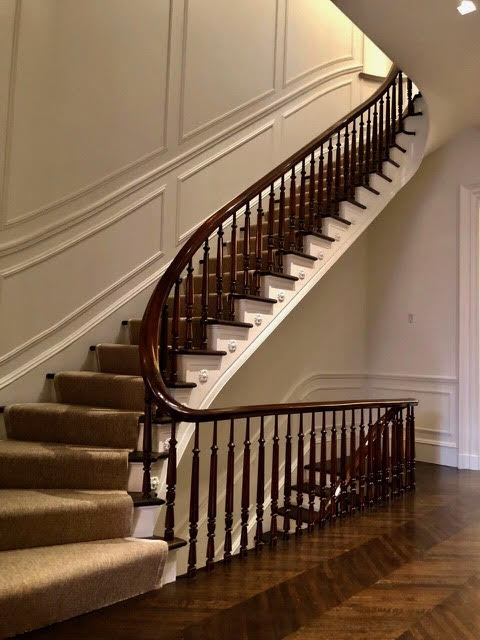
Services: Interior and Exterior Architectural Woodwork, Wood Windows, Doors and Millwork, Wood Staircases and Handrails, Building Cornices, Period Reconstructions, Architectural Woodwork Finishes
Follow Us: Facebook | Instagram | LinkedIn
Get a Proposal Today
If your institution manages a historic structure in New York City, reach out to Fifty Three Restorations for a written assessment and proposal. We bring the documentation standards, material expertise, and field execution that public and institutional landmark projects require.
Buildings in New York City age faster than owners expect, and every season of neglect adds cost. The right time to act is before damage spreads, not after.
Call us now: (212) 566-1053
Request a proposal online: fiftythreerestorations.com/contact-us
Fifty Three Restorations is based in Long Island City, NY and serves all five boroughs plus the greater New York metro area. Contact us today to start the conversation.
Conclusion
Landmark restoration is disciplined, demanding work. It requires documentation before decisions, material knowledge that takes years to develop, and field execution that honors the original craft. For the institutions that manage New York City's irreplaceable historic structures, the choice of restoration partner matters as much as the scope of work.
Fifty Three Restorations has served the New York City historic preservation community since 1984. We work from our Long Island City, NY base on projects across all five boroughs and the greater metro area. Contact us at fiftythreerestorations.com/contact-us or call (212) 566-1053.
Explore More Insights
Get Started with Your Project
Contact us today to schedule a consultation.
