

How to Work with a Historic Preservation Contractor: 7 Questions to Ask Before You Hire in New York City
Introduction
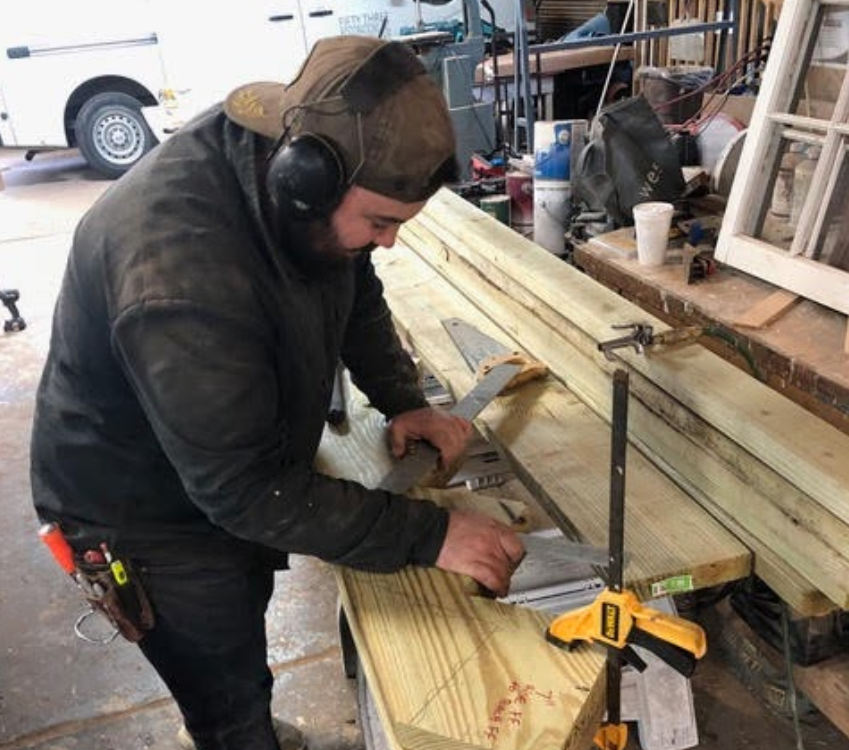
A contractor with a truck and a nail gun can win a bid on a historic New York City building. That does not mean they should. Unqualified contractors working on landmark buildings and historic district properties in New York City create LPC violations, damage irreplaceable material, and leave owners with costly remediation bills. Fifty Three Restorations, based in Long Island City, NY, has worked alongside the full range of contractors in the New York City market for more than 30 years. This guide gives building owners, co-op boards, and property managers the seven questions that separate qualified preservation contractors from general contractors who believe they can do the work.
Why Hiring Right Matters in New York City Historic Work
The stakes for a bad hire on a historic New York City building are higher than on a standard renovation project. The LPC can require you to reverse non-compliant work at your expense. Original materials damaged by an unskilled contractor cannot be recovered. And the cost of remediation, both financial and bureaucratic, is almost always higher than the cost of doing the project correctly the first time.
Here is what an unqualified contractor on a historic project looks like in practice:
- They propose vinyl window replacement when the LPC requires restoration or like-kind wood replacement
- They use visible fasteners and modern joinery where the original construction used traditional methods
- They strip and refinish historic woodwork with products incompatible with the original finish system
- They do not obtain LPC approvals they were told they needed and leave the owner exposed to violations
- They source substitute wood species without disclosing the substitution
- They provide no written documentation of conditions, materials, or methods
The 7 Questions to Ask Before You Hire
Question 1: What is your background in historic preservation specifically?
Not general construction. Not residential renovation. Historic preservation is a distinct field with its own professional training, technical standards, and regulatory framework. Ask for specific education, apprenticeship, or professional credentials in preservation. Vince Lepre, principal of Fifty Three Restorations, holds an MS in Historic Preservation from Columbia University and completed his initial training as an apprentice at the National Trust for Historic Preservation.
Question 2: Can you provide photographs of completed historic restoration projects in New York City?
Portfolio documentation is the most direct evidence of qualification. Before-and-after photographs, project descriptions, and client references on comparable scopes tell you far more than general company claims. Ask specifically for projects in your building type and in New York City's historic districts.
Question 3: Are you familiar with LPC filing requirements and have you prepared CoA applications?
A contractor who is unfamiliar with LPC procedures, Certificate of Appropriateness applications, or the Secretary of the Interior's Standards is not equipped for regulated historic work in New York City. Ask them to describe the approval process for your scope of work. Their answer will tell you immediately whether they have done this before.
Question 4: How do you identify and source matching wood species?
This question reveals technical depth. A qualified preservation contractor will describe a process for species identification, sourcing from specialty suppliers, and mock-up approval before execution. A general contractor will say they use what is available at the lumberyard.
Question 5: What documentation will you provide at the end of the project?
Qualified preservation contractors provide photographic documentation of existing conditions, completed work, and any materials specified. This documentation is a contract deliverable. It protects the owner in LPC reviews, future permit applications, and property transactions.
Question 6: How will you phase work in an occupied building?
Historic buildings in New York City are almost always occupied. A contractor who has not thought through access, dust control, phasing, and resident communication has not done this work before in a New York City building.
Question 7: What subcontractors or trade partners will you use, and are they qualified for historic work?
A preservation contractor who hires general trade subcontractors for the field work negates their own qualifications. Ask who will actually execute the work, what their training is, and whether they have worked on landmark properties before.
How Fifty Three Restorations Meets These Standards
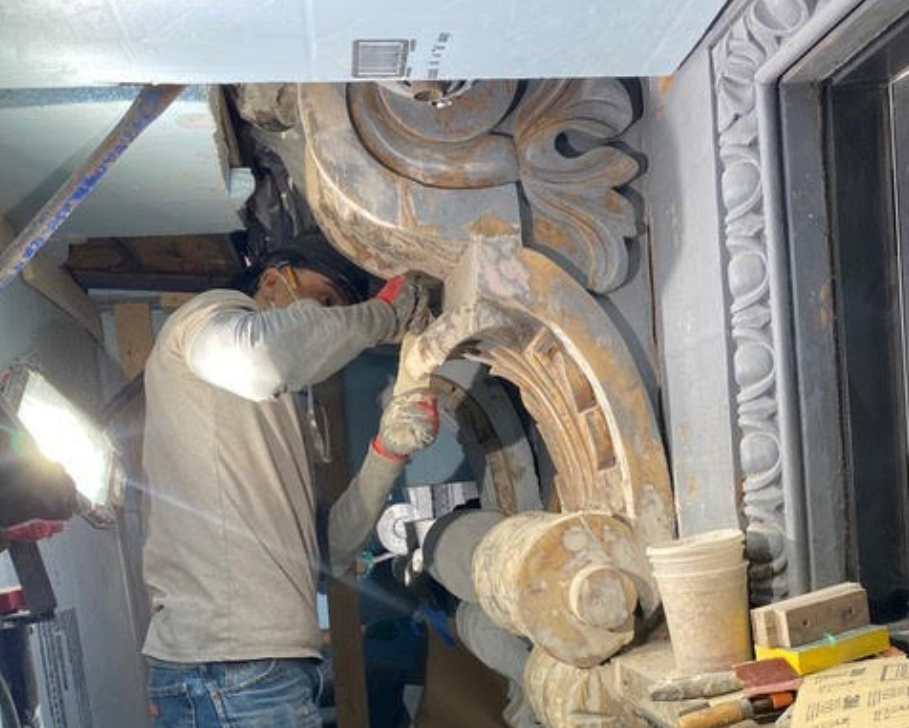
Principal Vince Lepre has worked on New York City landmark properties since 1984, with prior experience at the Metropolitan Museum of Art's American Wing and the National Trust for Historic Preservation. Our services cover the full scope of architectural woodwork restoration, from wood windows, doors and millwork to building cornices and period reconstructions.
We provide written condition assessments and photographic documentation on every project. We support LPC filings as a standard part of our service. Our craftspeople are trained in historic methods and have worked on New York City landmark properties throughout their careers.
Red Flags to Watch For in Contractor Proposals
- No written scope of work or specification of materials
- No mention of LPC compliance or permit requirements
- Proposal focused on speed and lowest price rather than method and material quality
- No portfolio of completed comparable projects in New York City
- Willingness to start without an assessment of existing conditions
- No documentation deliverables included in the proposed scope
Cost and Value of Hiring Right
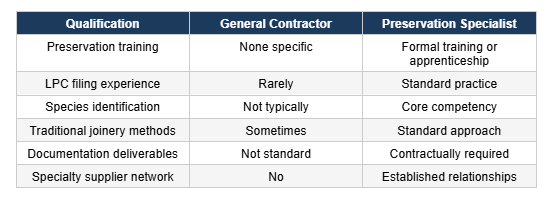
A qualified preservation contractor typically bids higher than a general contractor on the same project. Here is what that premium buys:
- LPC compliance that prevents violations and remediation costs
- Material quality that matches original performance and appearance
- Documentation that protects the owner in future transactions and reviews
- Methods that extend the life of the repair rather than accelerating re-deterioration
The cost of a single LPC violation, including fines and mandatory remediation, typically exceeds the preservation premium for the original project.
5 Practical Tips for Owners Hiring a Preservation Contractor
- Require a written condition assessment before accepting any proposal. A proposal without a prior assessment is a guess.
- Check references on completed historic projects, not just general construction jobs. Ask references specifically about LPC compliance and documentation.
- Verify that the principal with preservation credentials will be present at the site during execution. Credentials on a website mean little if the qualified person is not on the job.
- Require LPC filing support as an explicit deliverable in your contract, not an optional add-on.
- Ask for a material and methods specification document before work begins. This protects you if there is a dispute about what was agreed.
Frequently Asked Questions
How do I verify a contractor's LPC experience?
Ask for specific project names, addresses, and LPC file numbers. You can verify LPC filings on the LPC's online database. A contractor who has filed CoA applications will have a searchable record.
Should I hire an architect to oversee a preservation contractor?
For complex projects or larger scopes, yes. An architect with preservation experience adds design oversight and professional liability. For targeted restoration scopes, a qualified preservation contractor working directly with the owner is often appropriate.
What if my building is not in a historic district?
Even outside historic districts, the quality arguments for preservation specialists apply. Original old-growth wood performs better than modern replacements. Traditional joinery methods last longer than modern alternatives. Documentation adds value regardless of LPC requirements.
Does Fifty Three Restorations provide references?
Yes. We can provide references from comparable completed projects in New York City. Contact us to discuss your project scope and we will provide relevant references.
How quickly can Fifty Three Restorations assess my building?
We typically schedule initial site assessments within two to three weeks of a first contact, depending on our current project schedule. Urgent assessments for buildings with active deterioration can often be accommodated faster.
Customer Success: Why Qualifications Matter
Anne Leclercq of Asbury United Methodist Church described what it was like to work with a qualified team on a sensitive institutional project: "It was reassuring to work with experienced professionals who care about their work and the parish that they work with."
That reassurance is exactly what hiring the right preservation contractor provides. It comes from documented credentials, established methods, and a team that understands what is at stake when the building and its history are irreplaceable.
Fifty Three Restorations Serving Long Island City and Beyond
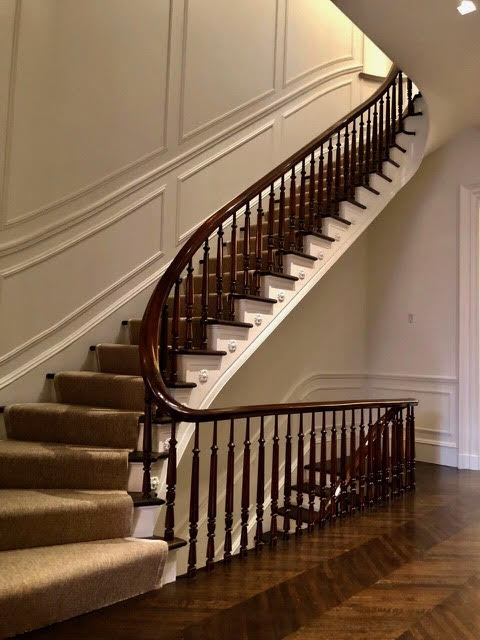
Fifty Three Restorations is dedicated to serving the diverse needs of the local community of Long Island City, Queens. With our convenient location near the Queens-Midtown Tunnel and the Long Island Expressway (I-495), we offer architectural woodwork restoration, wood windows and millwork, staircase restoration, cornice restoration, and period reconstructions to property owners throughout the New York City area.
Located at 38-16 Skillman Ave # B, Long Island City, NY 11101, our team is accessible from Manhattan, Brooklyn, the Bronx, Staten Island, and all parts of Queens. We serve customers across New York City, Long Island, and Westchester County.
Quick Access Information
- Minutes from Manhattan via the Queens-Midtown Tunnel
- Easy access via the Long Island Expressway (I-495) and the BQE (I-278)
- Serving residents across the Upper West Side, Brooklyn Heights, Park Slope, Harlem, and the Bronx
- Projects completed throughout New York State
Finding quality historic preservation contracting close to home matters. Clients throughout New York City and the greater metro area trust Fifty Three Restorations for reliable, professional craftsmanship backed by more than three decades of experience in historic preservation.
Get historic preservation contracting Services in New York City Now!
Call us today at (212) 566-1053 or contact us online to request a proposal.
Driving Directions to Fifty Three Restorations
Our shop is located at 38-16 Skillman Ave # B, Long Island City, NY 11101. We are easy to reach from all five boroughs and the greater New York metro area via the Queens-Midtown Tunnel, the Long Island Expressway (I-495), or the BQE (I-278). Parking is available near our location.
[Google Maps Embed: 38-16 Skillman Ave # B, Long Island City, NY 11101]
Scan or click the map at fiftythreerestorations.com to get turn-by-turn directions from your location.
Business Hours and Contact Information
Fifty Three Restorations serves building owners, architects, and property managers across New York City and the surrounding metro area. Reach us through any of the channels below.
Business Name: Fifty Three Restorations Inc
Address: 38-16 Skillman Ave # B, Long Island City, NY 11101
Phone: (212) 566-1053
Website: fiftythreerestorations.com
Services: Interior and Exterior Architectural Woodwork, Wood Windows, Doors and Millwork, Wood Staircases and Handrails, Building Cornices, Period Reconstructions, Architectural Woodwork Finishes
Follow Us: Facebook | Instagram | LinkedIn
Get a Proposal Today
If you are planning a historic preservation project in New York City, Fifty Three Restorations meets every standard in this guide. Contact us for a written assessment and proposal backed by three decades of New York City landmark experience.
Buildings in New York City age faster than owners expect, and every season of neglect adds cost. The right time to act is before damage spreads, not after.
Call us now: (212) 566-1053
Request a proposal online: fiftythreerestorations.com/contact-us
Fifty Three Restorations is based in Long Island City, NY and serves all five boroughs plus the greater New York metro area. Contact us today to start the conversation.
Conclusion
Hiring a historic preservation contractor is a different decision than hiring a general contractor. The qualifications that matter, the questions to ask, and the risks of getting it wrong are all specific to historic preservation work in New York City.
Fifty Three Restorations has built its reputation in New York City's preservation community on exactly these standards. Call (212) 566-1053 or visit fiftythreerestorations.com/contact-us.
Explore More Insights

Get Started with Your Project
Contact us today to schedule a consultation.
