

Wood Staircase Restoration in Greenwich Village
Wood staircase restoration in Greenwich Village is preservation work that touches some of the most complex and visually prominent elements inside a historic building. Staircases combine structural engineering with decorative artistry. Handrails, balusters, newel posts, stringers, and treads all serve functional roles while contributing to the building's interior character.
Fifty Three Restorations has provided staircase restoration services across New York City since 1990. Our team evaluates each staircase as a complete system, identifying where original materials can be preserved, where targeted repairs will extend the lifespan of existing components, and where reconstruction is necessary to maintain structural integrity.
In Greenwich Village, where building interiors often carry as much architectural significance as their facades, the condition of a staircase reflects the property's overall level of care and preservation.
Get a Proposal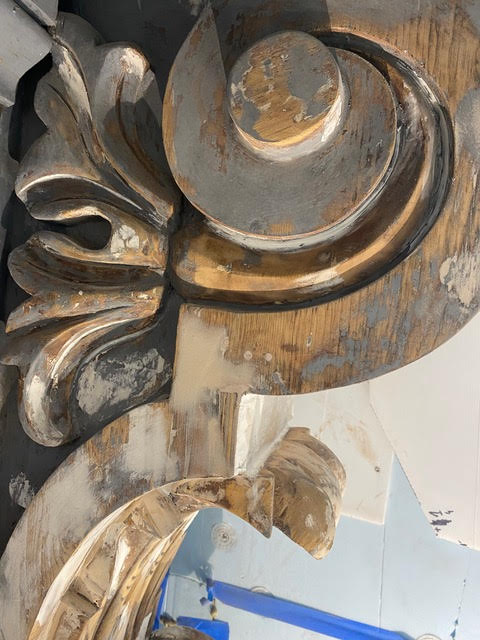
Assessing Staircase Condition and Structural Integrity
Understanding What Each Component Needs
Historic wood staircases wear in patterns that depend on traffic volume, environmental conditions, and the quality of original construction. Surface wear on treads is expected. But structural concerns, such as loosened joints, cracked stringers, or shifted connections, require more careful evaluation.
Before restoration begins, Fifty Three Restorations performs a thorough inspection covering both visible and concealed components. This assessment identifies which elements are structurally sound, which need reinforcement, and which have deteriorated beyond repair.
The findings shape a restoration plan that prioritizes preservation of original material while addressing the structural needs of the staircase as a whole.
- Stringer and carriage structural condition
- Tread and riser integrity and wear depth
- Handrail and baluster connection stability
- Newel post anchoring and condition
- Joinery tightness and adhesive condition

What Wood Staircase Restoration in Greenwich Village Covers
Structural and Decorative Restoration Working Together
Staircase restoration at Fifty Three Restorations addresses structural function and visual presentation as interconnected concerns. A staircase that looks restored but has not been structurally evaluated is incomplete, and one that is structurally sound but visually inconsistent misses the point of preservation.
Restoration tasks commonly include tread replacement or resurfacing, stringer reinforcement, handrail repair, baluster replacement or repair, newel post stabilization, and refinishing. When original components cannot be saved, replacement pieces are fabricated to match existing profiles and materials.
All staircase restoration work is guided by the Secretary of the Interior's Standards for the Treatment of Historic Properties, keeping preservation principles at the center of every decision.
Preserving Original Staircase Details
Saving the Craftsmanship That Time Built Into the Building
Many historic staircases in Greenwich Village contain details that reflect the skill and artistry of their original builders. Hand-turned balusters, carved newel posts, shaped handrail transitions, and inlaid or routed tread details are all elements worth evaluating for preservation.
Fifty Three Restorations documents these details during the assessment phase and incorporates their preservation into the restoration plan. Where original carved or turned elements are damaged, individual repairs are preferred over full replacement.
This approach recognizes that original craftsmanship carries a quality and character that new fabrication, even when skillfully executed, cannot fully replicate.
Original staircase details accumulate value over time. Each decade of patina, each worn tread, each hand-carved baluster contributes to the architectural identity of the building.


Restoration Across Staircase Types and Configurations
Straight, Curved, and Spiral Staircases Each Present Unique Challenges
Greenwich Village buildings contain a range of staircase configurations, from straightforward straight-run designs to more complex curved and spiral layouts. Each type presents different restoration challenges.
Curved staircases, for example, involve laminated stringers and continuous handrails that require careful disassembly and repair. Spiral staircases may have central columns and wedge-shaped treads with unique structural considerations.
Fifty Three Restorations brings more than 30 years of experience and a portfolio of over 1,100 completed projects to staircase restoration work. This breadth of experience provides the technical foundation needed to handle the full range of staircase types found in the neighborhood.

Start Your Wood Staircase Restoration Project
Preserving the Architectural Heart of Your Building
If your Greenwich Village property has a historic wood staircase that needs professional restoration, Fifty Three Restorations can evaluate its condition and develop a preservation-focused plan.
Call (212) 566-1053 to schedule an assessment, or visit our contact page to request a proposal.
Contact UsFrequently Asked Questions
In most cases, yes. The feasibility depends on the structural condition of key components like stringers, treads, and connections. Fifty Three Restorations evaluates each staircase individually to determine the most appropriate restoration approach.
Handrails, balusters, newel posts, treads, risers, and decorative elements are all evaluated for restoration potential. Components that are structurally sound are preserved and repaired. Those that have deteriorated beyond repair are replaced with custom-fabricated pieces matching original profiles and materials.
When structural deficiencies are identified during assessment, reinforcement is included in the restoration scope. This may involve stringer repair, connection tightening, carriage reinforcement, or sistering of weakened structural members.
Original elements are carefully evaluated, stabilized, and repaired in place whenever their condition allows. Individual damaged balusters can be repaired or replicated without disturbing the rest of the balustrade. Handrails are assessed for structural integrity and refinished to match the restoration's finish plan.
Full staircase restorations typically require four to ten weeks depending on the complexity of the staircase, the extent of structural and decorative repairs, and whether custom fabrication of replacement components is needed. A project-specific timeline is provided after the initial assessment.
More Of Our Staircase Work
A closer look at additional stair case restoration and reconstruction projects completed by Fifty Three Restorations.
Porch Stair Reconstruction — Brooklyn, NY
Carved Newel Detail — Interior Restoration

Curved Handrail & Newel Post Detail

Stair Railing Installation — White Balusters

Unfinished Carved Newel Post

Custom Curved Stair Components — Workshop
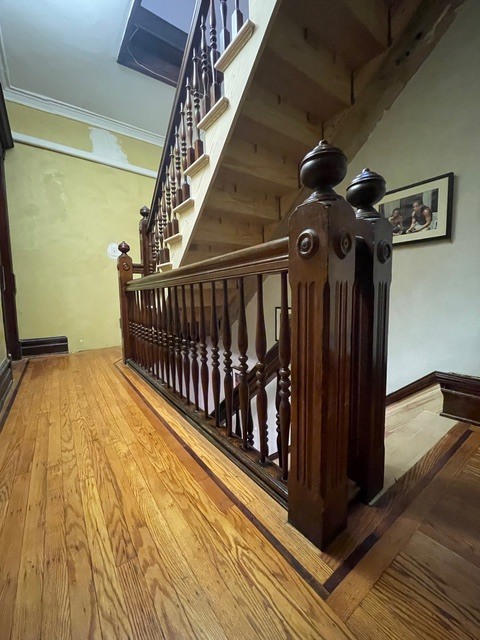
Landing Balustrade — Decorative Newel Posts
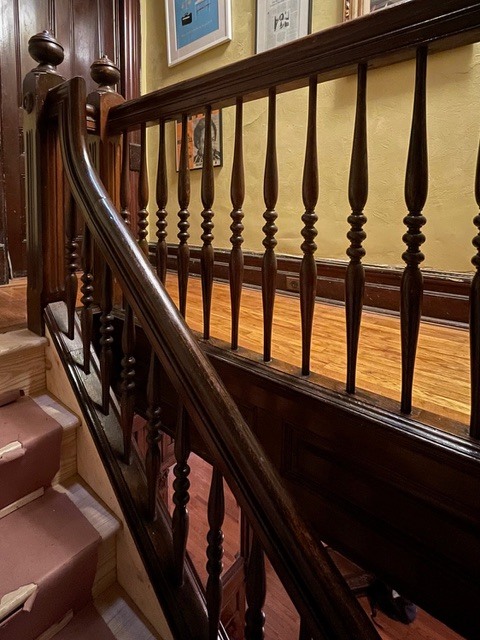
Turned Baluster Handrail Detail
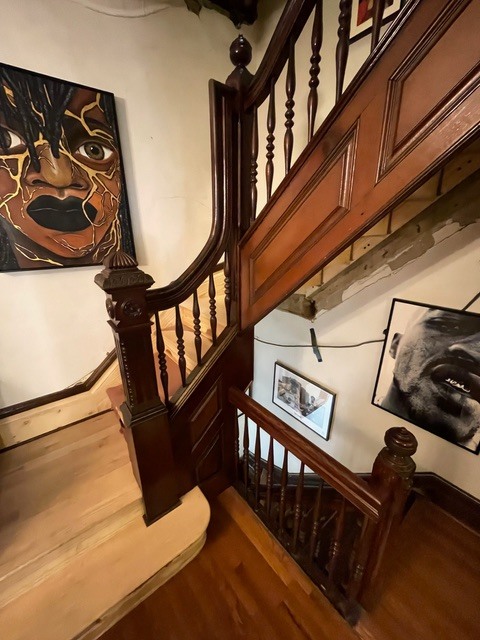
Staircase Restoration — Newel Posts

Gramercy Rounded Starting Step Fitting

Gramercy Custom Curved Starting Step Installation
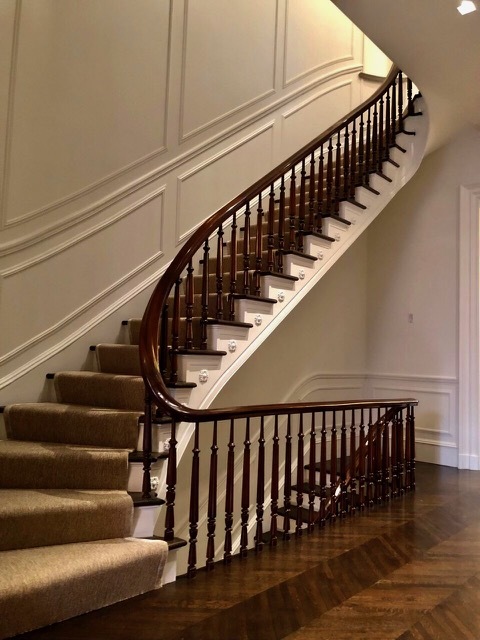
Curved Staircase — Carpet Runner & Wood Balustrade
Connect
We’re here to assist you with your woodworking needs.
